
How to Choose SD-WAN for Healthcare
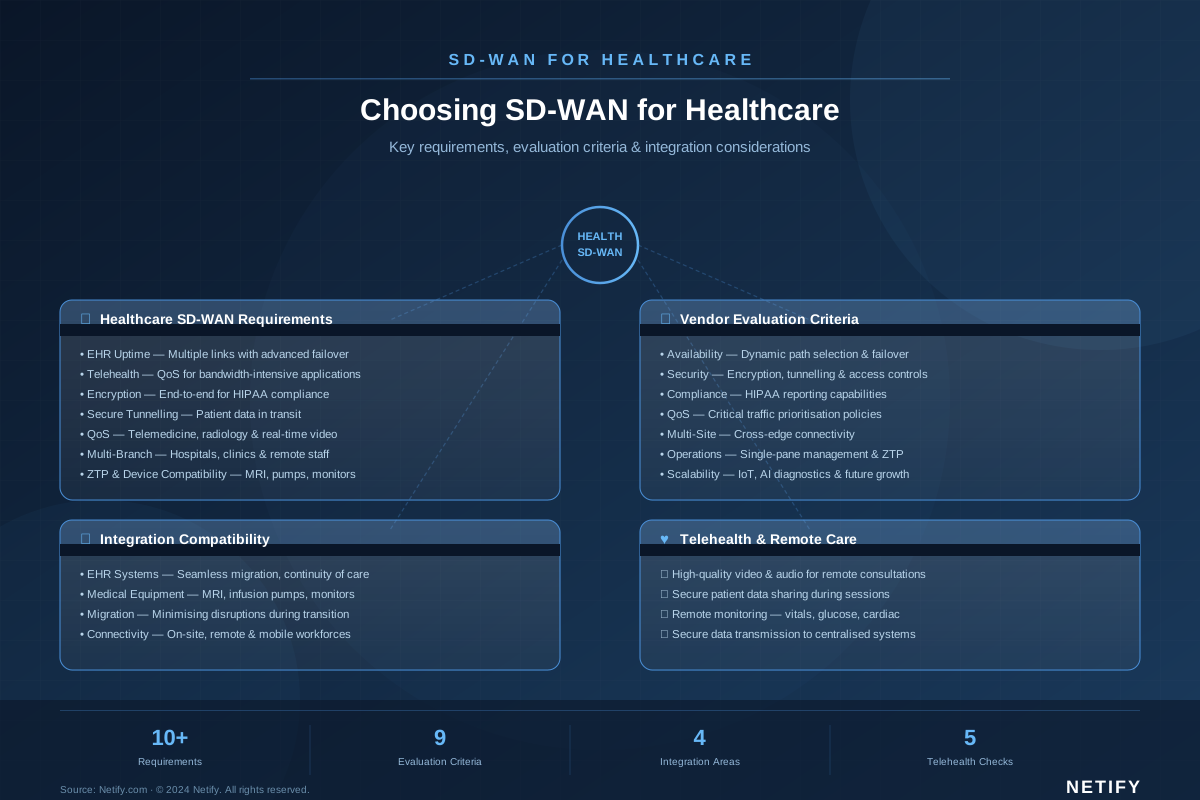
KEY FACTORS TO CONSIDER WHEN CHOOSING SD-WAN FOR HEALTHCARE
- Security, such as protocols, encryption and access controls.
- Quality of Service (QoS) capabilities for prioritising traffic.
- Multi-branch connectivity for on-site and remote workforces.
- Cost Reduction, by maximising bandwidth usage and using ZTP.
- Vendor Selection for healthcare-specific solutions.
- Integrations with existing systems and telemedicine capabilities.
Attacks aimed at healthcare organisations have proven very costly for those affected, with some attacks causing tangible impact to patient care. While many healthcare organisations may feel as though they are overburdened with regulation, plenty of security practitioners argue that there aren’t enough.
Choosing the correct infrastructure to provide high-quality patient care, ensure the protection of network resources and improve operational efficiencies sounds daunting, however in this article we look into how Software Defined Wide Area Network (SD-WAN) solutions can offer the networking architecture you need to address these issues.
Quick Navigation
At a Glance
- Constant availability and advanced failover via multiple network links and dynamic path selection
- End-to-end encryption, secure tunnelling and compliance reporting for patient data confidentiality
- Quality of Service (QoS) to prioritise bandwidth-intensive applications such as telemedicine and radiology imaging
- Multi-branch connectivity for hospitals, clinics and remote workforces
- Operational cost reduction through efficient bandwidth usage, single-pane management and Zero Touch Provisioning
- Seamless integration with existing EHR systems and medical equipment
- Scalability to support growing data volumes, IoT devices and future healthcare delivery models
Build your Healthcare SD-WAN RFP in minutes
Netify's Healthcare RFP Builder gives you structured, sector-specific questions covering HIPAA compliance, EHR integration, telehealth QoS and multi-branch connectivity. Add your own requirements, publish to 30+ SD-WAN and SASE vendors and managed service providers, and receive scored responses you can compare side by side. No sales calls, no gated content.
Healthcare-Specific Network Requirements
The healthcare sector requires constant availability for data, with continuous access to systems for emergency response, patient monitoring devices and electronic health record (EHR) systems to name a few. Traditional networks can be lacking in this feature, with network outages causing delays or even disruptions to systems, which can be a threat to patients experiences and health. This is however mitigated by SD-WAN, which offers the capability to leverage multiple network links, providing advanced failover functionality. Failover minimises network downtime, ensuring critical systems receive an uninterrupted connection via dynamic path selection techniques. These techniques utilise the best performing link based on real-time network metrics, reducing latency and transmission of data over disrupted links.
Not only is the availability of systems critical to healthcare, but so are the confidentiality and integrity of patient data. Regulations such as the Health Insurance Portability and Accountability Act (HIPAA), which mandates that healthcare providers must protect and correctly handle sensitive patient data. SD-WAN comes with integrated features to meet these needs, such as end-to-end encryption, secure tunnelling and compliance reporting, all of which help maintain the confidentiality of patient data and all regulations are complied with.
Another consideration for healthcare organisations is that they must also consider the scalability and flexibility of their network solutions. As patient data continues to grow rapidly, the network must be able to handle increased data loads without any compromise to performance. Healthcare SD-WAN & SASE platforms offer the scalability needed to adapt to these changes, providing seamless connectivity across various sites and accommodating future growth in data volume and complexity.
Healthcare SD-WAN Requirements
| Requirement | Why It Matters in Healthcare | SD-WAN Capability |
|---|---|---|
| EHR Uptime | Continuous access to electronic health records for emergency response and patient care | Multiple network links with advanced failover functionality |
| Telehealth | High-quality video and audio for remote consultations and timely diagnoses | QoS prioritisation of bandwidth-intensive applications |
| Failover | Network outages can cause delays or disruptions to critical systems | Dynamic path selection using real-time network metrics |
| Encryption | Confidentiality and integrity of patient data under regulations such as HIPAA | End-to-end encryption |
| Secure Tunnelling | Protecting sensitive patient data during transmission | Secure tunnelling for data in transit |
| Compliance Reporting | Healthcare providers must comply with data protection regulations | Integrated compliance reporting features |
| QoS Prioritisation | Critical traffic such as telemedicine and radiology imaging requires reliable performance | Quality of Service management with policy-defined critical traffic |
| Multi-Branch Connectivity | Hospitals, clinics and mobile or remote workforces need unified network access | Multi-branch connectivity enabling on-site and remote workforces |
| ZTP / Central Management | Scaling to new sites without on-site specialised network administrators | Zero Touch Provisioning and single-pane remote management |
| Device Compatibility | Medical equipment such as MRI machines, infusion pumps and monitoring systems require connectivity | Support for a wide range of medical equipment with real-time communications |
Key Healthcare-Specific Features of SD-WAN
Within the healthcare sector there are many considerations and requirements for network administrators that aren’t so prevalent across other industries.
SD-WAN achieves this by implementing dynamic traffic routing and Quality of Service (QoS) to load-balance traffic based on priority. Further to this, SD-WAN can also switch across multiple network underlays to ensure that technologies like remote telehealth are always running across the optimal path, providing real-time data access.
However, whilst prioritising specific traffic types is an important feature, arguably the most important network functionality is the ability to maintain continuous uptime. The aforementioned use of multiple network underlays is essential to SD-WAN offering improved uptime, as by leveraging this capability, redundant underlay can be used in the event of a link outage. This feature's significance is emphasised within the healthcare sector, with potentially severe consequences faced by (typically traditional WAN) networks unable to meet this demand.
Benefits of SD-WAN for Various Healthcare Sectors

One of the more apparent benefits of utilising an SD-WAN solution within a healthcare setting is the scaling capabilities. Offering networks with improvements for branch connectivity, SD-WAN is ideal for amalgamating clinics, laboratories, hospitals and GP practices for greater connectivity between a range of systems and services. Due to SD-WAN utilising a range of network underlay, healthcare providers no longer have to rely on Multiprotocol Label Switching (MPLS) connections, allowing for cheaper alternatives to be aggregated to achieve similar, if not better performance.
For healthcare providers, a continuously growing number of networked devices means that networks are beginning to become overwhelmed with data. With many interconnected healthcare systems, often including IoT devices, sensors and smart healthcare equipment, high volumes of data are continuously generated and transmitted across the network. Unfortunately, bandwidth limitations mean that networks are restricted in the amount of data they can transmit at any given time and therefore this leads to issues such as collisions which result in packet loss. SD-WAN offers healthcare providers with the solution to this issue by often implementing edge computing support packaged in the solution. Edge Computing distributes computation closer to the data source, such as the IoT sensor or smart healthcare equipment, reducing traffic sent to a central hub for processing. By reducing the volume of traffic sent across the network, edge computing significantly lowers latency and reduces bandwidth utilisation – meaning that other critical services can utilise these extra resources for greater performance.
SD-WAN’s optimisations aren’t just limited to basic network optimisations though. SD-WAN enables newer technologies such as telemedicine, allowing for HD video consultations with patients, regardless of whether they are rurally/remotely located.
Access Control
Arguably the most important facet of network security within the healthcare industry is the restrictions imposed on data access. Without data access, the healthcare industry couldn’t comply with regulations such as the General Data Protection Regulation (GDPR) in the UK. Data access isn’t only limited to regulations though – in a healthcare setting, typically all patient data is strictly confidential and should remain so unless required for diagnosis, treatment or care reasons. This means that healthcare providers have a duty of care to protect patient data from prying eyes, bad actors or malicious threats.

The best way for network administrators in the healthcare industry is to implement functions such as Zero Trust Network Access (ZTNA), segmentation and encryption. These features, all typically integrated into SASE and SSE solutions, restrict access to data by:
- Encryption: Removing the ability to read the data without decryption.
- Segmentation: Isolating the data from the rest of the network.
- ZTNA: Refrains from automatically trusting accessor based on user, device or location and continuously requires accessor to re-authenticate themselves in order to gain authorisation and access to data.
These features mean that patient records and sensitive medical data can be adequately protected from unauthorised access. Without them, healthcare networks can struggle to support role-based access, therefore emphasising the importance for healthcare providers to maintain access control.
However, even with access control implementations, healthcare networks are still vulnerable to more sophisticated attacks.
Advanced Persistent Threats (APTs)
One potential form of these sophisticated attacks that can be particularly effective in systems that have neglected to implement role-based access are Advanced Persistent Threats (APTs). APTs infect a network with the sole intention of gaining as much access as possible to different facets of the network over an extended period of time and then stealing data back to an attacker. APTs differ from more traditional attack vectors as they tend to be more complex and are persistent, remaining active after initial access. They also don’t necessarily start malicious activities straight away, with manual startups often being utilised (such as via a wait, trigger or command). By straying from an automated initialisation, APTs can be more subtle, appearing human-led to avoid detection.
APT attacks typically follow the below timeline:
- Reconnaissance: Attacker finds potential vulnerabilities in the network or healthcare provider’s systems.
- Gain Access: The APT is deployed onto the network.
- Lateral Movement: The APT attempts to move across the network laterally, allowing for discovery of access limitations, data of interest and other potential vulnerabilities or weaknesses in the network and underlying infrastructure.
- Exfiltration: Once the APT has finished moving laterally, the process of stealing data can begin. Typically, this is sent to a remote location so that an attacker can then access the data without having to be present or on-site.
- Post-Exfiltration: The clean-up process of the attack. Whilst the APT can remain on the network, either exfiltrating more data or acting as reconnaissance for future attacks, post-exfiltration is usually made up of cover-ups. These cover-ups hide the malicious activity so that its harder for retroactive network scans to pick up on the activity.
With this in mind, network administrators within the healthcare industry must put counter measures in place for defending against reconnaissance and lateral movement, whilst also being able to utilise a dynamic Quarantine and Recovery (QaR) system to address the specific nuances of individual APT threats. By introducing a QaR, healthcare providers can counteract different APT functions and therefore minimise the impact that they can have on the network in the event of a breach.
QaR systems frequently use Artificial Intelligence (AI) to achieve this, with AI allowing for more adaptive responses to issues, rather than static policies or rules which may not catch all behaviours of the APT.
Want to learn more about SD-WAN for the healthcare industry?
Key Factors to Consider When Choosing SD-WAN for Healthcare
Healthcare networks have become a prime target for cyber attacks, something Synnovis (a private pathology firm that processes blood tests for major London NHS hospitals), the victim of an attack in June 2024, can attest to. Threats created by malicious actors seek patient data, enabling hackers to hold victims to ransom or allowing the information to be sold on dark web marketplaces. This emphasises the importance of securing the network, utilising advanced security protocols, strong encryption and secure access controls – features all provided by SD-WAN solutions.
 Robert Sturt
Deep Dive: We've covered the 10 questions to ask when buying Healthcare CyberSecurity.
Unlike traditional WAN networks, SD-WAN provides Quality of Service (QoS) management and the functionality to create policies defining critical traffic that requires the most reliable performance. For healthcare providers, QoS enables the ability to prioritise bandwidth-intensive applications, such as telemedicine, radiology imaging and real-time video consultancy, ensuring adequate network resources are provided to these systems in order to prevent any degradation of traffic.
For providers split across multiple sites, such as hospitals, clinics and mobile or remote workforces, it can be very difficult to create network access across these different network edges. However, SD-WAN is geared for multi-branch connectivity, enabling both on-site and remote workforces and providing rapid scalability for new sites and increased data loads.
Not only does SD-WAN offer network improvements, but it can also offer a reduction in operational costs. By being more resourceful about bandwidth usage in comparison to traditional WAN networks, healthcare providers do not have to run dedicated lines between machines. SD-WAN’s managed through a single pane enables remote configuration and management, and when bundled with Zero Touch Provisioning, it enabled scaling to new sites without on-site specialised network administrators. Through reductions in specialised staff, healthcare providers can save costs with a single dedicated team to manage all sites remotely.
When choosing security products, services and vendors, it may seem like every manufacturer and vendor has something specifically geared toward the healthcare industry. While some companies have more healthcare experience than others, the availability of solutions catered to the industry is a great thing because healthcare organisations have to worry about the entire range of cybersecurity threats including some of the most prevalent from ransomware, to IoT security, application security and vendor risk management. So, while there’s no shortage of commercial solutions for every aspect of a healthcare organisation’s cybersecurity needs, it is vital that the organisation adopts a robust cybersecurity framework to align business and regulatory needs with solutions to stay secure and remain compliant.
Vendor Evaluation Criteria
| Category | Evaluation Criteria | Example Question |
|---|---|---|
| Availability / Failover | Multiple network links with advanced failover and dynamic path selection | How does the solution handle link failure to ensure uninterrupted connectivity for critical systems? |
| Encryption / Security | End-to-end encryption, secure tunnelling, advanced security protocols and secure access controls | What encryption standards and secure tunnelling methods are provided? |
| Compliance Reporting | Integrated compliance reporting to meet regulations such as HIPAA | What compliance reporting capabilities are included to demonstrate regulatory adherence? |
| QoS | Quality of Service management with policies for critical traffic prioritisation | Can QoS policies prioritise telemedicine, radiology imaging and real-time video consultancy? |
| Multi-Site | Multi-branch connectivity for hospitals, clinics and remote workforces | How does the solution provide network access across different network edges including mobile workforces? |
| Operations / Management | Single-pane remote configuration and management | Does the platform offer a single-pane management interface for all sites? |
| ZTP | Zero Touch Provisioning for scaling to new sites without on-site specialists | Does the solution support Zero Touch Provisioning for rapid deployment at new sites? |
| Device Compatibility | Support for MRI machines, infusion pumps and patient monitoring systems | Is the solution compatible with existing medical equipment requiring real-time communications? |
| Scalability | Handling increased data loads, IoT devices, AI-driven diagnostics and new healthcare delivery models | How does the solution scale to support future increases in data volume and new healthcare applications? |
Supporting Telehealth and Remote Patient Care
SD-WAN supports Telehealth functionalities such as remote consultations by enabling high quality video and audio connectivity, whilst also capable of creating secure connections for sharing patient data during Telehealth sessions. This gives healthcare providers the ability to not only provide real-time video consultations but improves patient access to healthcare services and enables healthcare professionals to deliver timely and accurate diagnoses, even in remote or underserved areas.
The reliability of connections is important for monitoring patients’ health metrics from home, such as with remote monitoring devices that track vital signs, glucose levels, or cardiac rhythms. SD-WAN provides secure transmission of data to centralised health systems, offering improved confidentiality and integrity for the network. This ensures that patient data remains secure while enabling healthcare providers to make informed decisions based on real-time data.
Telehealth & Remote Care Support — Checklist
| Traffic | Sensitivity | SD-WAN Need |
|---|---|---|
| Video consult | High | QoS priority |
| Voice calls | High | Low jitter |
| Imaging upload | Medium | Bandwidth |
| EHR queries | Medium | Low latency |
| Remote monitoring | Medium | Stable links |
| Guest Wi-Fi | Low | Separate segment |
Telehealth Readiness Checklist
- ☐ High-quality video and audio connectivity for remote consultations
- ☐ Secure connections for sharing patient data during telehealth sessions
- ☐ Support for remote monitoring devices tracking vital signs, glucose levels or cardiac rhythms
- ☐ Secure transmission of data from monitoring devices to centralised health systems
- ☐ Enabling healthcare providers to make informed decisions based on real-time data
Integrating SD-WAN with Existing Healthcare IT Infrastructure
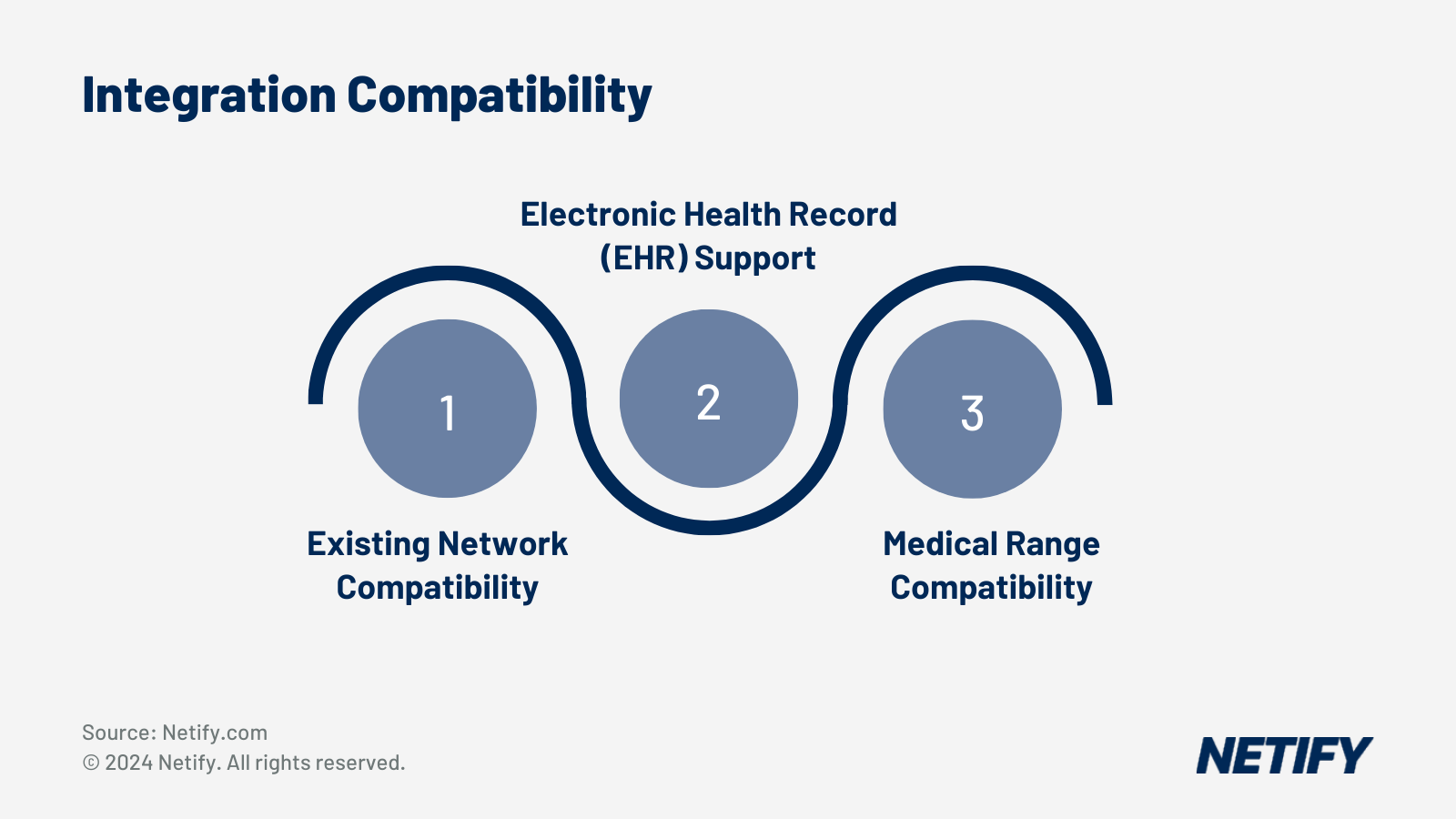
It is important for IT decision makers at Healthcare providers to select an SD-WAN solution that is not only feature-rich to meet demands, but is also compatible with existing healthcare infrastructure. A seamless integration of SD-WAN with the existing Electronic Health Record (EHR) is essential to minimise potential disruptions during the migration process. This integration ensures that healthcare providers can maintain continuity of care and access to patient records without interruption.
 Robert Sturt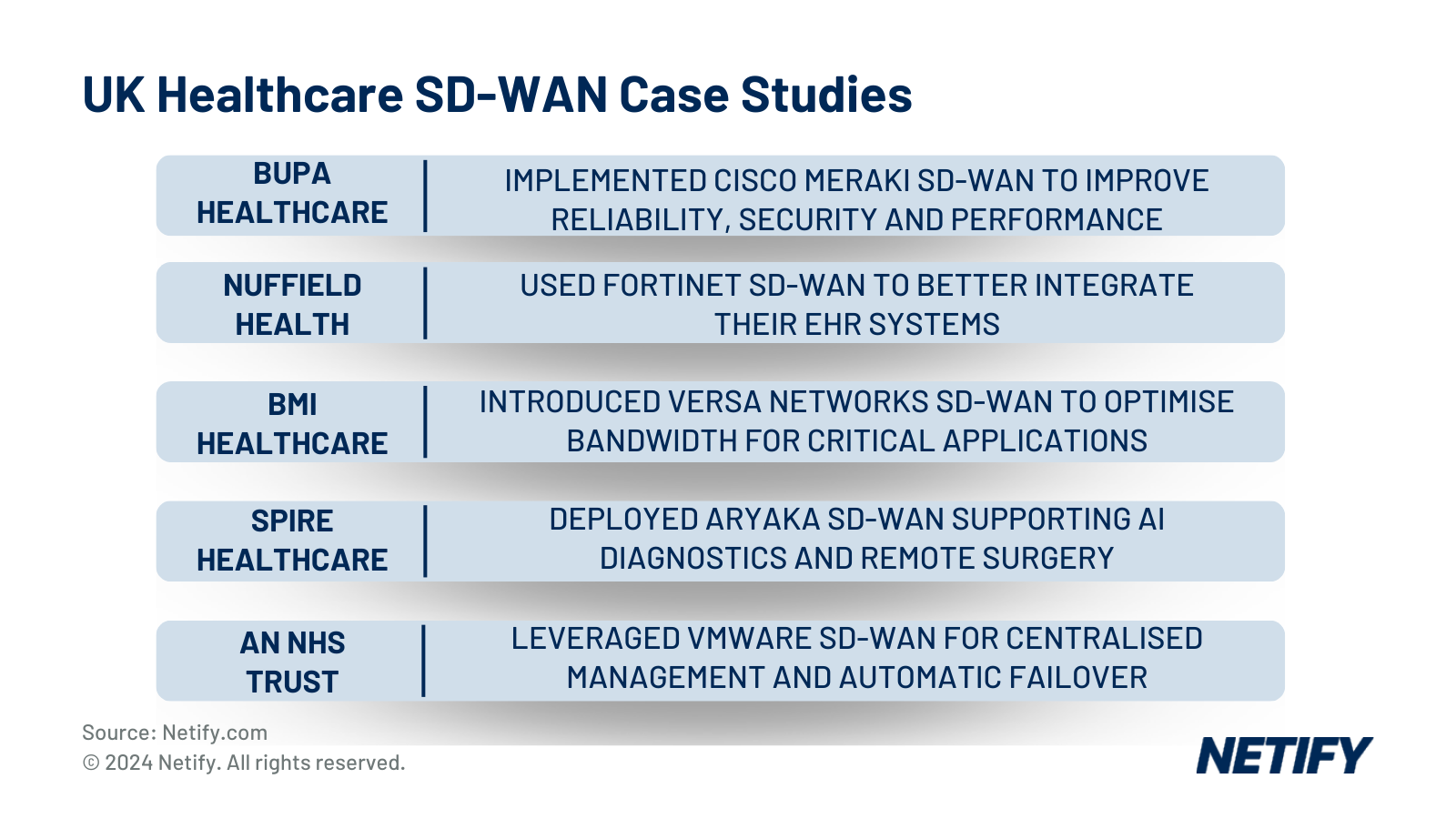
Related Post: We've detailed successful case studies of SD-WAN in Healthcare.
Any chosen SD-WAN solution must also support connectivity for a wide range of medical equipment, in order for real-time communications from devices such as MRI machines, infusion pumps and patient monitoring systems. Compatibility with these devices ensures that healthcare providers can leverage the full potential of their medical equipment while maintaining secure and reliable network connections
Integration Compatibility
| Integration Area | Examples Mentioned | What to Confirm with Vendors |
|---|---|---|
| Electronic Health Records | Existing EHR systems | Seamless integration to minimise disruptions during migration; continuity of care and access to patient records |
| Medical Equipment | MRI machines, infusion pumps, patient monitoring systems | Real-time communications support; compatibility with a wide range of devices |
| Migration Continuity | Existing healthcare infrastructure | Minimising potential disruptions during migration process; maintaining continuity of care |
| Connectivity Requirements | On-site, remote and mobile workforces; multiple sites | Secure and reliable network connections across all network edges |
Integrating SSE (Security Service Edge)
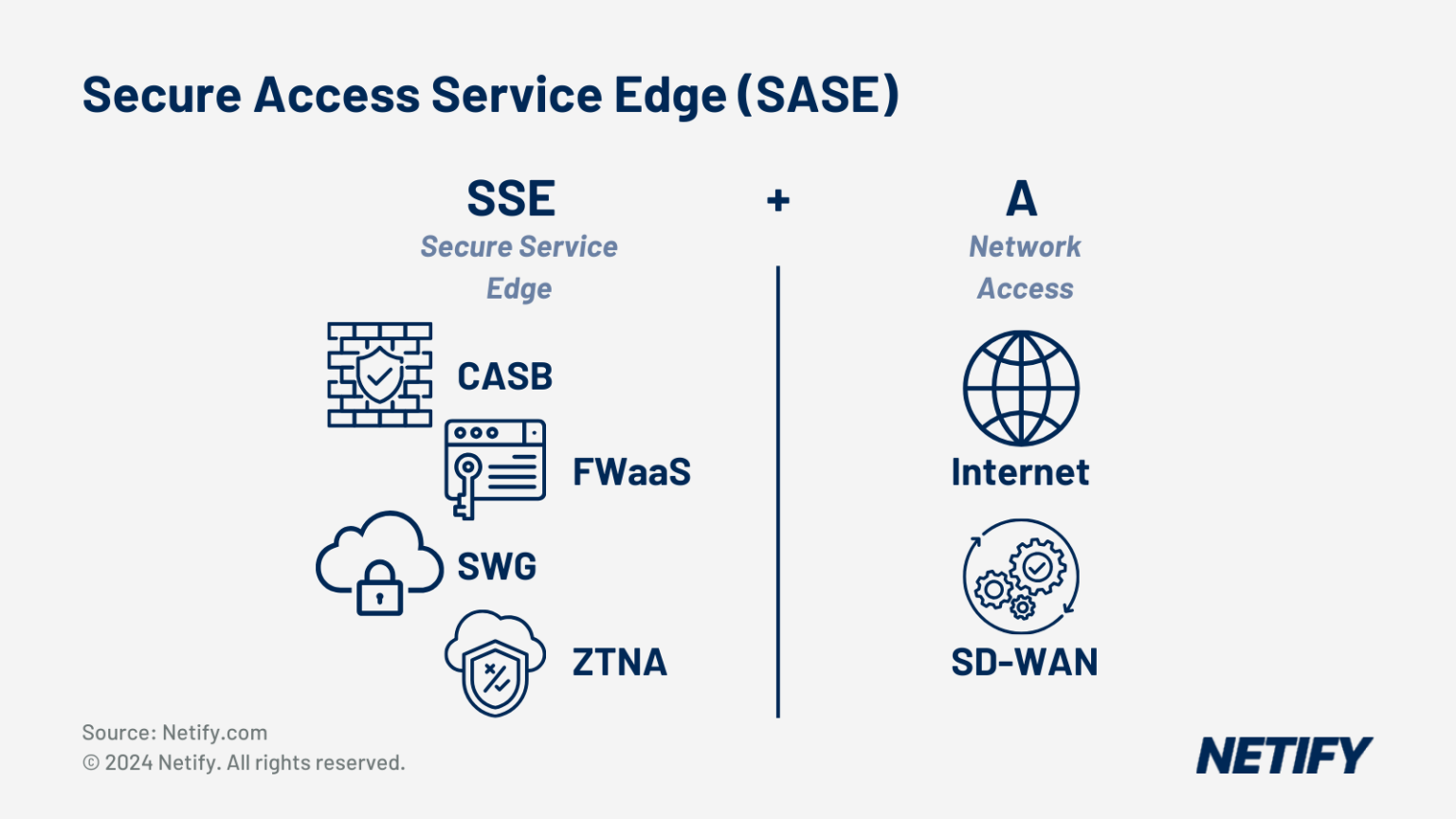
Secure Service Edge (SSE) provides the healthcare industry with the ability to decouple networks from their security measures. Increasingly adopted, SSE reduces the risk of leveraging disparate solutions and ensures that, through the use of a single vendor, that multiple security capabilities are bundled together via a cloud-centric model for ease of integration.
These cloud-based security services, such as Cloud Access Security Broker (CASB), Firewall-as-a-Service (FWaaS), Secure Web Gateway (SWG) and Zero Trust Network Access (ZTNA).
These features are essential for the Healthcare industry, who require strict security policies to be enforced across cloud applications. SSE can be particularly beneficial for patient management systems, telemedicine and meeting data privacy and compliance with healthcare regulations.
However, SSE is extended with SASE.
Integrating SASE (Secure Access Service Edge)
SASE combines SSE with the Access (A) of Software-Defined Wide Area Network (SD-WAN) solutions in order to make Secure Access Service Edge. SD-WAN is used to simplify the management of a network by providing automated traffic routing over several network links, a centralised dashboard for controlling user access, policy management and cloud integrations. By unifying these features, SASE enables efficient connections across distributed and mobile workforces, providing access to the healthcare network based on identity not the connection origin location. This factor means that SASE supports all network edges, reducing the complexity for network administrators and enabling local breakout access to the cloud for more effective use.
Through this increased connectivity, SASE can improve the security of remote medical services and telehealth by unifying security protocols to ensure that patient data is protected both on-premises and across remote facilities.
Artificial Intelligence (AI) in Network Security
Whilst not a new technology, in recent years Artificial Intelligence (AI) has seemingly been integrated into every aspect of computing and this is also the case for network security.
AI and machine learning algorithms are being implemented in order to improve threat detection and response capabilities. Learning from large datasets and combined threat intelligence, AI can adapt to new threats by learning malicious behaviours, catching even zero-day threats. Within a healthcare setting, AI network security tools analyse network traffic patterns in real-time to detect anomalies that may indicate breaches, malware or APTs that could affect patient care or cause downtime to hospital equipment.
Data Encryption
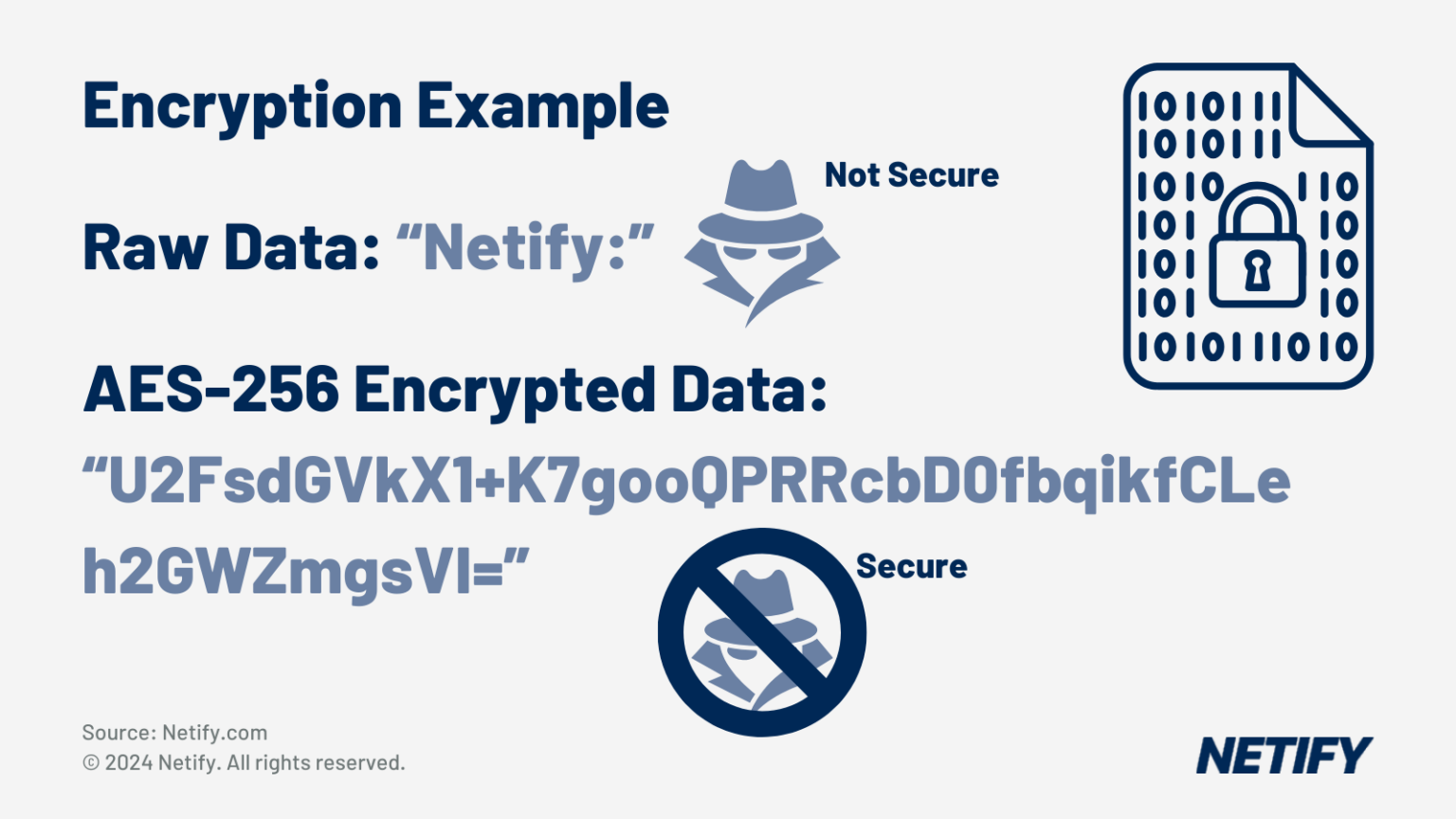
Encryption is an essential security measure that converts readable patient data (plain text) into cipher text, typically utilising a key or hashing algorithm, so that data can be stored/transmitted in a secure format only accessible by authorised users or systems.
Encryption is therefore an essential capabilities for healthcare networks, obscuring patient data so that the data cannot be read by unauthorised accessors, even in the event of a breach.
Artificial Intelligence is increasingly being used to improve encryption protocols by adapting them in real-time to ongoing threats, which introduces dynamic data protection in comparison to traditional encryption methods.
Essential to complying with regulatory requirements, encryption should be at the forefront of healthcare network design, making SSE/SASE solutions all the more desirable, especially those offering AI-driven dynamic data protection.
Data Loss Prevention (DLP)
In the same way that encryption can protect data even in the event of a breach, Data Loss Prevention (DLP) offers the ability to prevent unauthorised sharing or leakage of sensitive data if an APT or other threat manages to find a way onto the network and attempts to start exfiltrating data.
DLP works by identifying sensitive information within your business network, analysing traffic to pattern match against this sensitive information and stops transmission in its tracks in the event of a match.
For healthcare networks, Data Loss Prevention is a core feature that should be implemented, assisting with minimising the impact any potential breach may cause – which can be heavily tied to regulatory compliance. DLP tools are typically integrated into many SASE solutions and a range of vendors have introduced Artificial Intelligence to continuously update scanning policies. This has consolidated DLP’s capabilities in an industry that is constantly integrating a range of new technologies, such as IoT and telemedicine, allowing for new forms of sensitive information to be quickly identified without human intervention.
Further to this, DLP enables patient data to be kept secure when sharing across hospital departments or with external partners, all of which are transmission points over multiple mediums and lead to potential vulnerabilities for breaches.
Zero Trust Architecture
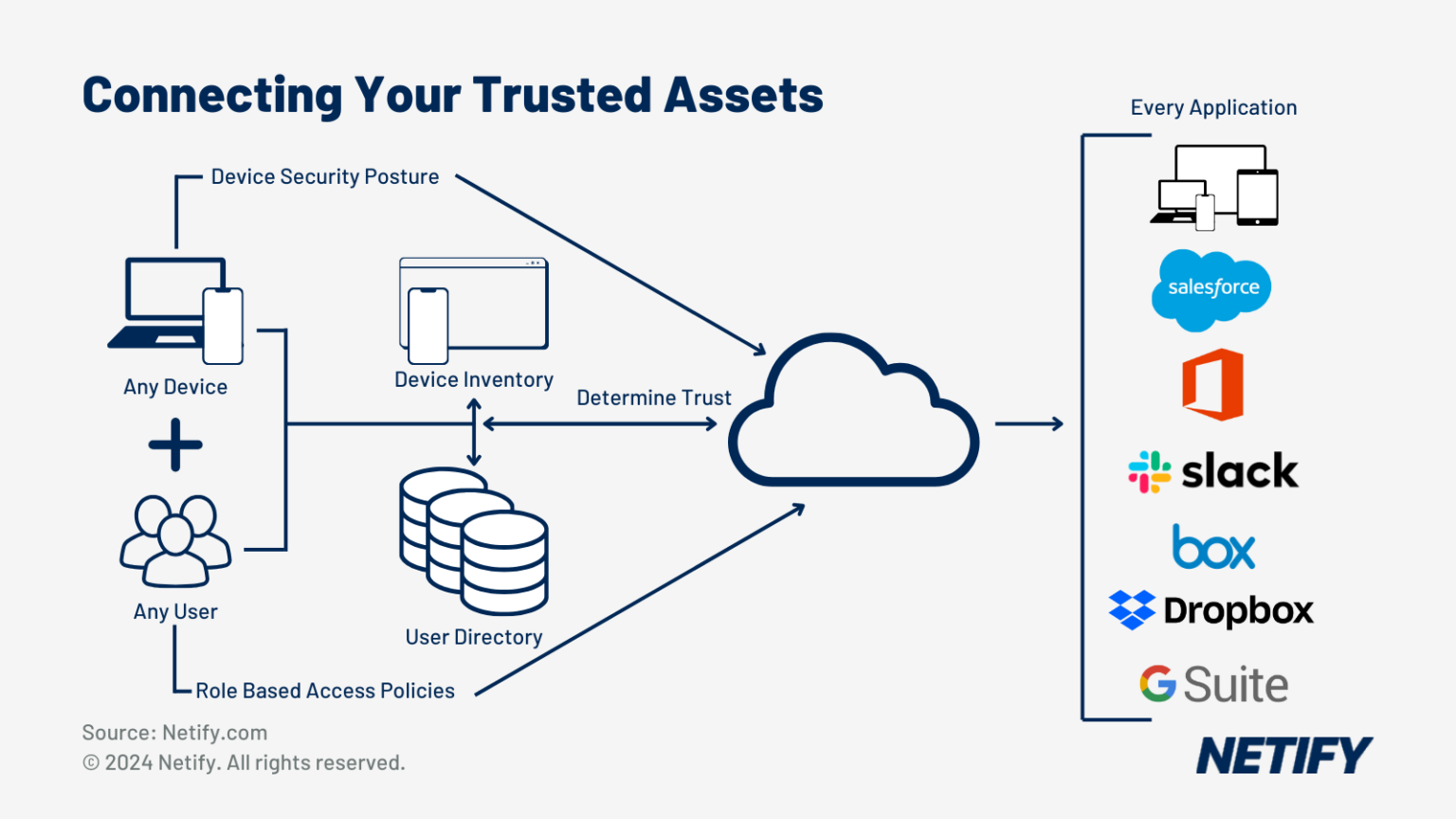
In the past, the use of in-house system architectures had helped standardise a perimeter-security model. This implies that any device connecting to the network from within the in-house healthcare network should be assumed to be authenticated and thus the network is designed to primarily prevent threats from outside the healthcare network.
Zero Trust is an identity-centric security strategy designed to provide no trust-based access to systems and therefore moves the boundary to be from the system to the connecting device. There are three core principles to Zero Trust:
"Never trust, always verify"
Access trust is withheld until a full identity check is completed for the connecting professional or sensor system. Regardless of the device or application attempting to access the system, authentication is a must in order to access the healthcare network. By undergoing this trust brokering process, this treats each connection as if it were entirely new and ensures there is sufficient authentication and authorisation before granting access to any resources or patient data.
Least privilege for context
After the verification process is complete, the system must consider the requirements of the application and the range of privileges the accessing professional should have access to. This is a major consideration as, for example, a surgeon and a reception administrator should have very different access privileges. By differentiating, healthcare networks can provide the professional with the minimal access required in order to carry out their tasks. The professional should therefore have no visibility or access to parts of the system outside their permitted scope.
Device security
Finally, if all identification and privilege checks complete successfully, the system must validate that the user’s device is secure. This validation commonly includes: regulatory compliance tests and antivirus (or alternate security solution) on the connecting device are operational.
Following access being granted, the system must continuously monitor and validate the system. If there are any changes to any of the three principles the connection must be re-evaluated and should they no longer be deemed valid, the system must assume security has been compromised and revoke access.
By applying a Zero Trust architecture within the healthcare industry, providers can ensure that patient data is protected across all access points, with verification preventing inherent trust to critical medical systems.
Electronic Health Record (EHR) Security
According to the National Institutes of Health (NIH), in 2022 there were 1463 cyber attacks weekly, with one of the most common targets being Electronic Health Records (EHR). The reason for this being that EHR systems contain such a vast quantity of health history and treatment data, which can be used for a myriad of malicious activities, such as social engineering and ransom. Further to this, any downtime caused by EHR attacks can be severely disruptive to healthcare services, with the average downtime for hospitals at 24 days, with the average cost of $10 million.
This means that protecting EHR systems should be a major consideration for healthcare providers. Luckily SSE & SASE solutions have this covered, offering Next Generation Firewall (NGFW) integrations, allowing networks to protect EHR systems and setup alerts to administrators if suspicious activity is detected. In addition to the firewall, creating access control measures also means that healthcare providers can limit access to EHR data, stopping unauthorised attackers.
Internet of Medical Things (IoMT) Security
IoT (Internet of Things) devices, often coming in the form of sensors and smart devices have changed computing by using vast amounts of data in order to convert analysis of the real-world into digitised formats.
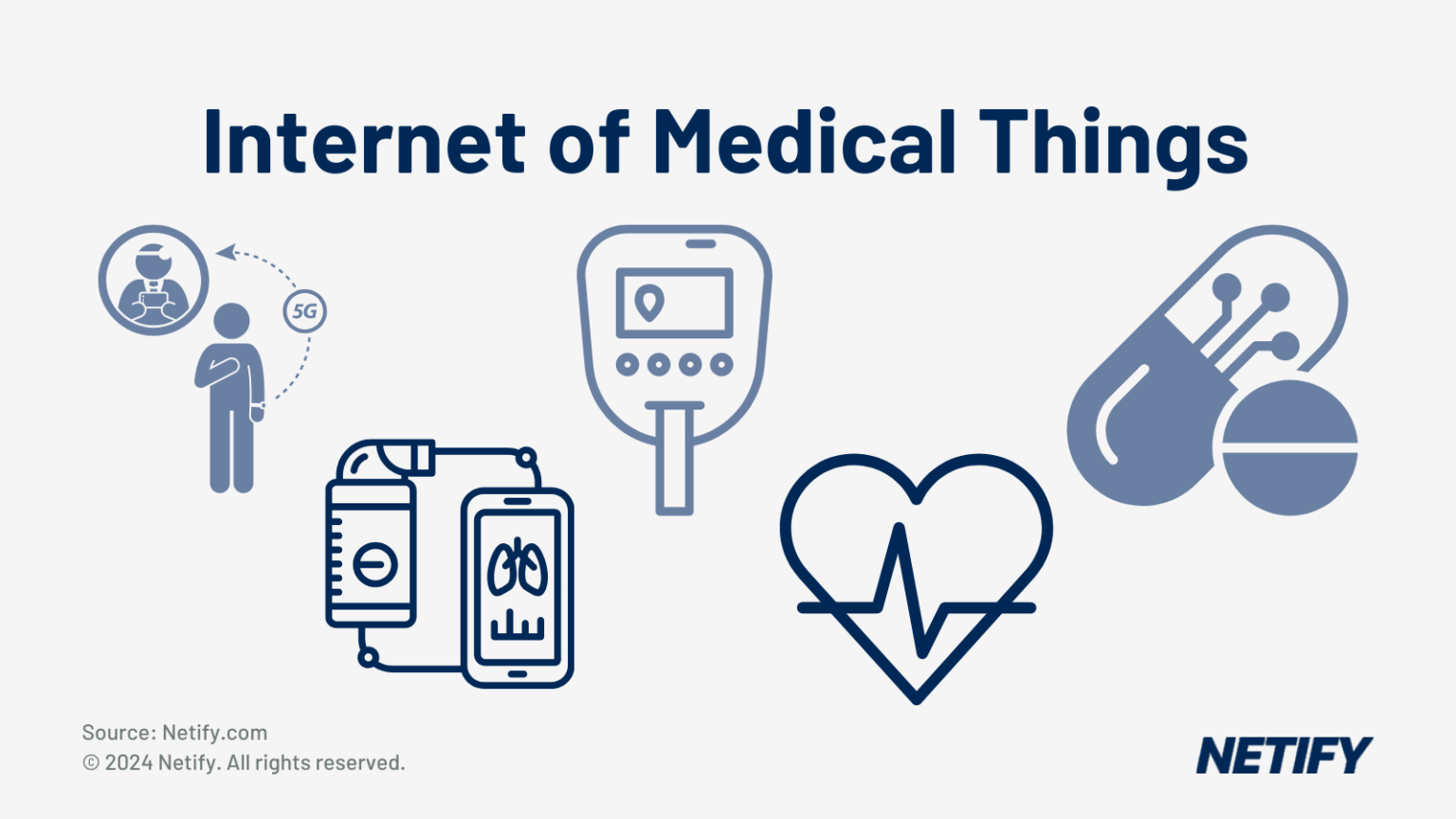
And this is showcased by in the healthcare industry where Internet of Medical Things (IoMT) are increasingly being introduced. IoMT devices include:
- Remote patient monitoring devices,
- Glucose monitors,
- Heart rate monitors,
- Smart inhalers,
- Connected contact lenses,
- Wireless blood pressure monitors,
- Implantable cardioverter-defibrillators (ICDs),
- Smart pills,
- Personal Emergency Response Systems (PERS)
- Smart Hospital Equipment
Due to this widespread reliance on IoMT that will surely only continue to grow, implementing security measures for IoMT devices should be a major consideration for healthcare providers.
ZTNA with multi-factor authentication (MFA) methods are ideal for restricting access to the data produced from IoMT devices, whilst device management techniques to maintain software and firmware of IoMT devices are essential best practices.
Endpoint Detection and Response (EDR)
Whilst firewalls are typically ideal for securing IoMT devices, for endpoint devices such as servers, laptops, tablets or handheld devices, Endpoint Detection and Response (EDR) is more preferable.
EDR solutions monitor, detect and respond to potential threats across endpoint devices that are used by doctors and staff, ensuring that patient information remains secure from unauthorised access.
Once a threat is detected, EDR analyses its nature and responds by either containing, blocking or rolling back the threat. Containing prevents threats from accessing a wider range of the network, blocking stops transmissions of malicious or exfiltrated patient traffic and roll backs rewind the network to an earlier state.
Telehealth and Remote Care Security
The introduction of Telehealth and Remote Care has eased restrictions previously imposed on patients that previously had to go into a clinic or hospital for treatment. However, by connecting remote or mobile workforces, equipment and sensors, healthcare providers are essentially extending their network edges, exposing a greater attack plane that must be protected.
Whilst the US Department of Health and Human Services provides privacy and security tips for patients, one way that healthcare providers can protect against these is with SSE and SASE security. By integrating encryption from SASE, telehealth services can provide encrypted connections to networked systems, regardless of the geographical location that the remote care workforces are accessing from.
Network Segmentation
Network segmentation is the process of isolating network traffic, applications or data into their own subsections of the network. Often considered as a foundational security strategy, segmentation can be utilised to improve network performance and also to prevent lateral movement in the event of a breach.
Network segmentation has been adopted into many SD-WAN and SASE solutions and provides a shift from static VLAN to a dynamic, policy-based approach. Whilst VLANs are effective, SD-WAN mitigates their limitations in flexibility and cost-efficiency through easily configurable software configuration-based segmentations.
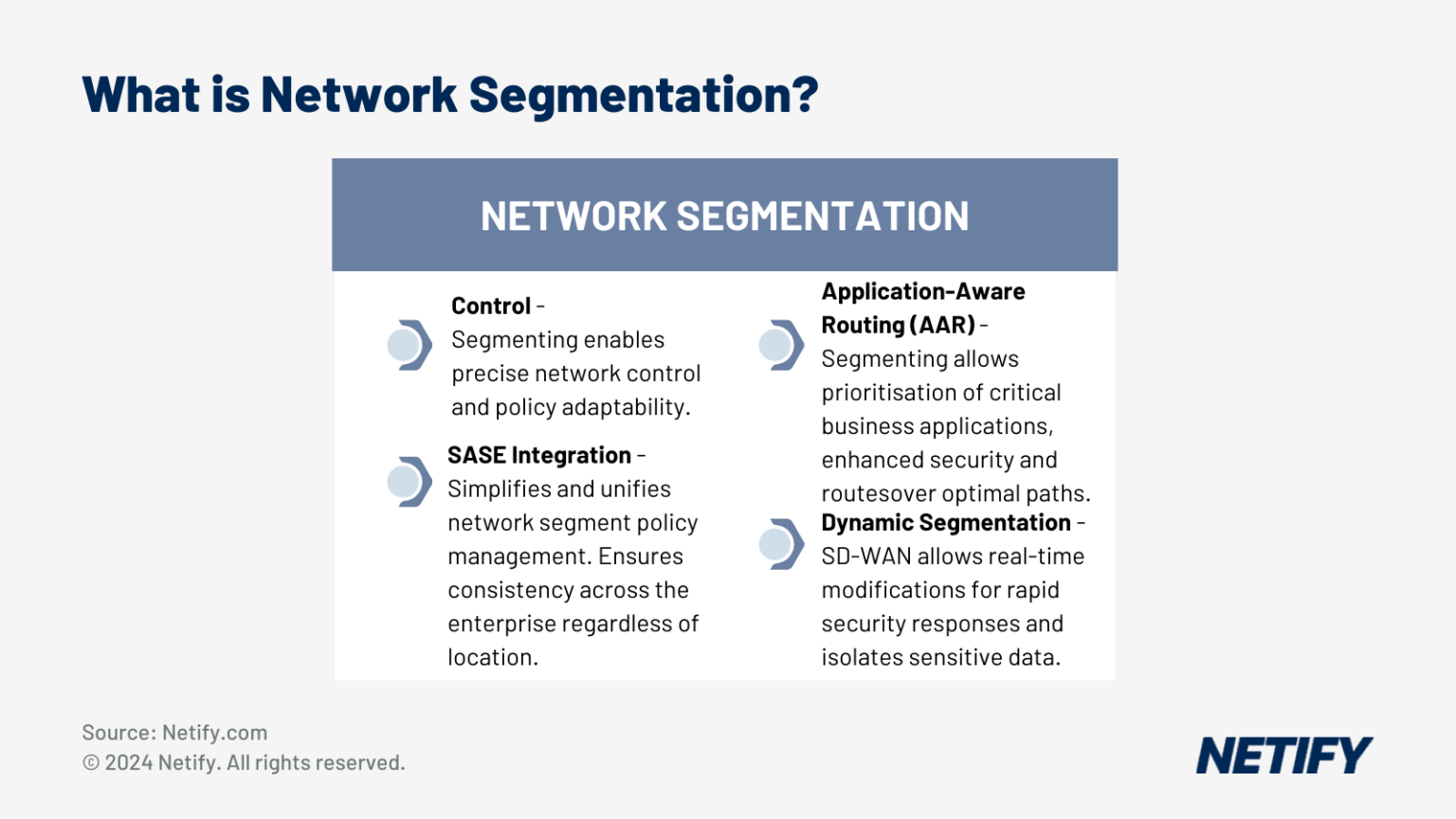
For the healthcare industry, network segmentation is essential for isolating sensitive patient data, research databases and equipment traffic from general administrative traffic, minimising the amount of exposed attack planes and minimising potential breaches.
Phishing and Social Engineering Prevention
Phishing and Social Engineering go hand-in-hand for arguably some of the most powerful tools in an attacker’s arsenal. These are tactics built to exploit vulnerabilities in humans rather than computer systems, by pretending to be someone or something they’re not in an attempt to gain trust or access to a restricted system.
Although email filters and similar techniques are simple solutions for more basic prevention, phishing and social engineering doesn’t have to be computer-based. Any forms of deception or information exfiltration are examples of phishing and social engineering,
Therefore, the best way to prevent against social engineering and phishing is to focus primarily on the deception and exploitation of a workforce, rather than dedicated computer-based restrictions. This means that workforces should undertake rigorous training to teach them what to look out for, the importance of securing the network and the principles of verifying before trusting.
Once achieved, healthcare providers should then look to implement computer-based techniques, such as AI-powered email filters, which detect and block phishing emails that are targeting healthcare employees before they even get the chance to read them.
Alongside training and filtering, using Zero Trust Architecture within SASE allows for the network to constantly re-authentication accessors, therefore nullifying attackers' attempts to phish for credentials.
Ransomware Protection
In Microsoft’s Digital Defence Report 2024, 389 US-based healthcare institutions were successfully hit with ransomware, which caused a range of issues, such as network and system downtime, critical medical operations delayed and appointments rescheduled.
When considering this, healthcare institutions should ensure that they are implementing adequate ransomware protection in order to prevent such occurrences, stopping files from being encrypted and held for payment.
As these attacks are often aimed at the most critical systems within healthcare networks, implementing AI-based threat detection and SASE solutions to isolate these systems, utilise a Zero-Trust architecture and find potential threats before they can encrypt files for ransom.
Incident Response Planning
Whilst preventing breaches is ideal, it is unrealistic to expect that no breach will ever happen, especially with such a targetable asset such as a healthcare network containing patient data. This means that having a strong incident response plan is essential to minimising damage and impacts caused by a breach.
One example of this is leveraging AI for predictive analysis and real-time threat responses, allowing healthcare providers to minimise disruptions to patient care and restrict the volume of exfiltrated or ransomed data.
Another example should be a set of written instructions that outlines how network administrators should respond in the event of a security incident. The goal of the IRP is to limit potential damage that healthcare providers may face, including stolen patient data or equipment downtime.
Security Information and Event Management (SIEM)
A Security Information and Event Management (SIEM) solution is used to collect and analyse data security in order to monitor and respond to potential threats. More recent iterations of SIEM solutions have introduced Artificial Intelligence, which can more dynamically assess for potential threats, including zero-day threats, due to the ability to comprehend their actions and the threats they pose even if the exact threat-skillset hasn’t yet been seen before.
This is important for the healthcare industry as AI-powered SIEM protection can manage and analyse logs from connected medical devices/systems, allowing for identification of suspicious patterns before they get the chance to escalate.
Medical Device Patch Management
One of the main reasons that potential vulnerabilities and exploits arise is due to issues with firmware that becomes exposed over time. Typically, to rectify these issues, providers of the devices/software, release updates to patch over these exploits in order to maintain security. Unfortunately, these updates may not be automatically rolled out, which can lead to unmanaged vulnerabilities popping up over time within a healthcare network.
Whilst device patching can be managed by humans, we would argue that a more effective technique is to utilise AI-driven patch management tools to handle the bulk of the update management process, alleviating manual work and allowing for administrators to monitor patch management at a high-level.
By using AI-driven patch management tools, healthcare providers can ensure that connected medical equipment stays updated, reducing the risk of there being exposed vulnerabilities to attack/exploited.
Regulatory Compliance (e.g. HIPAA, GDPR)
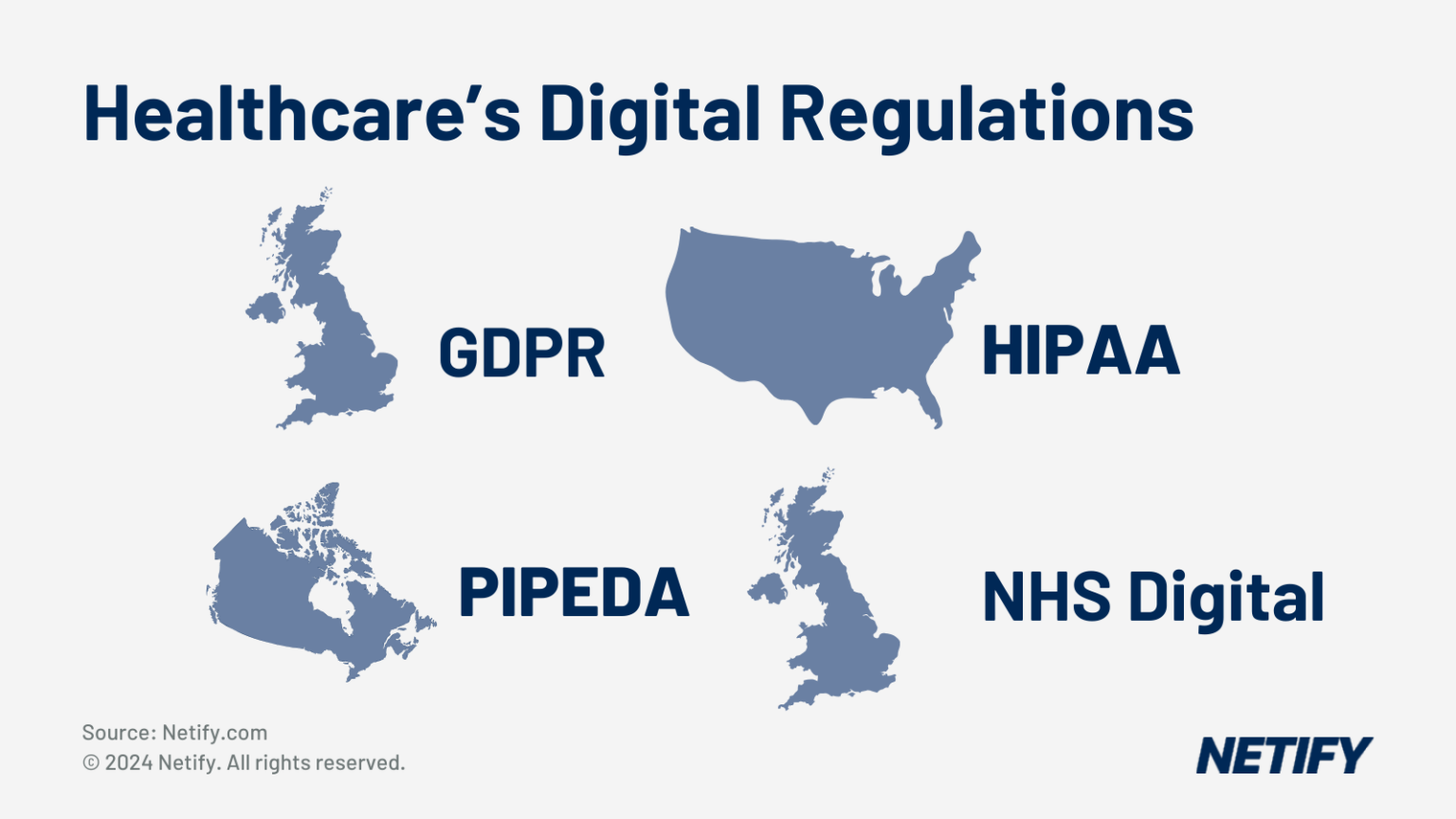
It’s important for network administrators within the healthcare sector to maintain regulatory compliance, an issue that is only emphasised by differences in regulations from one geographical region to the next. Our focus matrix below highlights on just some of the major differences in legislation between the UK and North America, with GDPR and NHS Digital guidelines providing the UK with the majority of their regulations and for North America HIPAA dictates US regulations and PIPEDA for Canada.
NHS Digital Standards
NHS Digital Standards form the regulatory backbone for all healthcare technology implementations across the UK, stipulating that healthcare data and medical records are collected, managed and exchanged consistently and securely throughout the NHS and social care sector.
The NHS Digital standards encompass seven critical domains including Information Standards, Technical Standards, Clinical Risk Management, and Security and Data Protection requirements. The standards work collectively to ensure interoperability, clinical safety, data protection and accessibility, creating a secure environment where technology supports better staff and patient satisfaction.
Data Security & Protection Toolkit (DSPT)
The Data Security and Protection Toolkit (DSPT) is an online self-assessment tool used by all organisations that access or process NHS patient data and systems. The primary purpose of the DSPT is to help these organisations measure and demonstrate their compliance with key data security and information governance requirements set by the Department of Health and Social Care, given that healthcare regulations dictate that NHS systems must protect patient information from data breaches.
NIS Regulations & GDPR
The Network and Information Systems (NIS) Regulations 2018 are a set of UK laws designed to improve security and resilience of networked systems - with UK-based healthcare having to utilise the appropriate measures to manage their cyber and information infrastructure against security risks.
UK Data Protection (ICO / GDPR) and Access Management
The General Data Protection Regulation (GDPR) governs the collection, storage, processing and sharing of personal data. Processing of data must satisfy both an Article 6 condition (for personal data) and an Article 9 condition (for special category data, such as health information). The ICO is the UK’s independent regulator for data protection, responsible for enforcing the Data Protection Act 2018 and GDPR.
Different Aspects of Healthcare's Digital Protection Regulations From UK and North America
The requirements mean that IT and administrative staff must be trained on how SD-WAN security protocols are intrinsically linked to UK and North American regulations. The result is that the configuration and deployment of SD-WAN must not be conducted in isolation — the IT team must work closely with healthcare compliance experts. There are managed service providers or professional services companies that can help ensure your business remains compliant when deploying SD-WAN.
Compliance Comparison: UK vs North America
Legislation Type ▼
UK (GDPR, NHS Digital):
Comprehensive data protection (GDPR) with healthcare-specific guidelines (NHS Digital) [cite: 1856]
North America (HIPAA, PIPEDA):
Healthcare-specific regulation (HIPAA) in the USA, and general data protection regulation (PIPEDA) in Canada, with adaptations for the healthcare sector [cite: 1856]
Scope ▼
UK (GDPR, NHS Digital):
All personal data, including healthcare data handled by both public and private sectors [cite: 1856]
North America (HIPAA, PIPEDA):
In the USA, applies to healthcare providers, insurers, and their business associates. In Canada, applies to all personal data, including healthcare data handled by commercial organisations [cite: 1856, 1857]
Data Sharing within Networks ▼
UK (GDPR, NHS Digital):
Strict rules about sharing with third parties without explicit consent, NHS Digital oversees secure data sharing within NHS networks [cite: 1857]
North America (HIPAA, PIPEDA):
Allows sharing of patient data for treatment, payment, and operations without explicit consent but requires safeguards in the USA. In Canada, allows sharing with adequate consent, organisations must establish policies for data exchange security [cite: 1857, 1858]
Data Encryption Requirements ▼
UK (GDPR, NHS Digital):
Encryption is recommended under GDPR as a security measure, NHS Digital has strict guidelines for encryption to protect patient data during transfer [cite: 1858]
North America (HIPAA, PIPEDA):
HIPAA mandates encryption of electronic Protected Health Information (ePHI) during storage and transmission, particularly in networks. In Canada, PIPEDA recommends encryption as a best practice for secure data exchange, focusing on minimising unauthorised access to sensitive patient information [cite: 1858, 1859]
Data Breach Notification ▼
UK (GDPR, NHS Digital):
Mandatory notification to the ICO within 72 hours for breaches, including those impacting healthcare networking [cite: 1859]
North America (HIPAA, PIPEDA):
Mandatory notification to HHS and affected individuals without unreasonable delay, generally within 60 days, in the USA. In Canada, mandatory notification to the OPC and affected individuals is required when a breach poses a significant risk of harm [cite: 1859, 1860]
Patient Consent ▼
UK (GDPR, NHS Digital):
Explicit consent is required for the processing of patient data, NHS Digital provides a framework for managing patient consent for data sharing [cite: 1860]
North America (HIPAA, PIPEDA):
Implied consent is sufficient for treatment, payment, and operations in the USA, while written consent is needed for non-standard use. In Canada, implied consent is used for essential healthcare services, while explicit consent is needed for secondary use [cite: 1860, 1861]
Data Portability ▼
UK (GDPR, NHS Digital):
Patients have the right to request copies of their data in a portable format, including healthcare records (applies under GDPR) [cite: 1861]
North America (HIPAA, PIPEDA):
HIPAA guarantees patient access to health records, allowing digital copies if feasible, but no specific portability format is mandated. In Canada, PIPEDA requires organisations to provide access to personal data in an accessible format upon request [cite: 1861, 1862]
Third-Party Vendors ▼
UK (GDPR, NHS Digital):
GDPR holds both data controllers (e.g. hospitals) and processors (e.g. vendors) accountable, Data Processing Agreements are required [cite: 1862]
North America (HIPAA, PIPEDA):
Both HIPAA in the USA and PIPEDA in Canada require organisations to ensure third-party vendors meet privacy obligations. HIPAA mandates Business Associate Agreements (BAAs) for all third parties handling ePHI, whereas PIPEDA recommends contracts to ensure that third parties provide a comparable level of protection [cite: 1862, 1863]
Data Localisation ▼
UK (GDPR, NHS Digital):
Data can be processed within the EU/EEA or other countries with adequate protection, special considerations apply to NHS patient data for security and privacy [cite: 1863]
North America (HIPAA, PIPEDA):
No localisation requirements in the USA, patient data can be stored offshore provided HIPAA requirements are met. In Canada, there are no specific localisation requirements, but organisations must protect transferred data, including cross-border data sharing [cite: 1863, 1864]
Interoperability & Standards ▼
UK (GDPR, NHS Digital):
NHS Digital supports interoperability and data standards such as FHIR (Fast Healthcare Interoperability Resources) to facilitate secure networking between systems [cite: 1864]
North America (HIPAA, PIPEDA):
Encourages interoperability through ONC standards and FHIR adoption in the USA, focusing on secure communication channels within healthcare networks. Canada also supports interoperability, often guided by provincial regulations, and generally follows FHIR standards [cite: 1864, 1865]
Healthcare Requirements & How SD-WAN Achieves Them
How SD-WAN Meets Healthcare Regulation Requirements
Data Protection & Privacy Regulations ▼
SD-WAN solutions offer integrated security features, such as end-to-end encryption, authentication protocols and segmentation to maintain the integrity of data, whilst restricting access from unauthorised sources.
Data Sovereignty and Localisation ▼
SD-WAN enables healthcare organisations to utilise intelligent traffic routing capabilities to direct traffic through specific pathways and network links in order to match data sovereignty requirements, ensuring that sensitive data remains within authorised jurisdictions.
Network Resilience and Reliability ▼
SD-WAN increases network availability and failover capabilities through the ability to transmit traffic over multiple network underlays. This means that traffic can be routed dynamically, unlike traditional WAN which uses static routing configurations, with automatic failover ensuring continuous uptime.
Secure Remote Access and Telehealth Support ▼
SD-WAN supports secure remote access capabilities by establishing encrypted connections for telehealth services, ensuring that patient consultations and data exchanges are protected from unauthorised access.
Compliance with Industry Standards and Certifications ▼
SD-WAN solutions often come with built-in compliance tools and reporting capabilities, assisting healthcare organisations in meeting industry standards and maintaining necessary certifications.
Scalability and Support for Emerging Technologies ▼
Adapting to the increasing use of Internet of Things (IoT) devices and artificial intelligence (AI) in healthcare requires networks to be scalable. SD-WAN meets this infrastructural requirement, easily integrating IoT devices and helps to support AI applications through optimised bandwidth and performance.
Comprehensive Network Monitoring and Management ▼
Understanding if data has been breached is extremely important, especially in a healthcare setting where data is often sensitive. SD-WAN provides centralised control and real-time monitoring of network traffic, allowing healthcare IT teams to detect anomalies and potential security threats quickly.
However, it is important to also ensure that healthcare IT and administrative staff receive adequate resources and training for SD-WAN security protocols. This is a major consideration as, especially with some solutions that may be lacking customisability, administrators will need to be aware of how their SD-WAN solution will need to be configured to meet all of the regulatory requirements.
Whilst considering training, for larger healthcare organisations it’s important to introduce customised training for multi-location healthcare systems on secure management and compliance best practices. This is important due to the complexity of storing sensitive data across multiple locations, further made more complex by differences in geographical regulations for the industry.
Key Network Deployment Priorities in Healthcare SD-WAN
Clinic-to-Core Connectivity
Through dynamic path selection, link aggregation and backup connection capabilities, SD-WAN enables resilient, high-speed links between remote clinics, GP surgeries and core hospital data centres. Often utilising a mix of broadband, 4G/5G and MPLS, SD-WAN allows for uninterrupted access to central EHR systems and health databases. For example, Norfolk Community Health & Care connected over 150 sites with SD-WAN, gaining improved performance and reduced outages.
The Need For Consistent Security Policies to Prevent Data Breaches
When deploying across multiple sites (or trusts), healthcare providers should consider their security policies to prevent breaches of data. One way this can be achieved is through consistent security policy making - which is made all the more easier through SD-WAN implementation.
Secure Remote Access (and Access Control)
With the growing use of telehealth services, SD-WAN provides the necessary infrastructure to facilitate secure, high-performance access to clinicians working remotely. SD-WAN often integrates zero-trust models, identity solutions and encrypted tunnels, ensuring remote staff access clinical systems safely and efficiently, with policy-based controls to protect patient data and meet regulatory compliance.
Utilising Network Segmentation To Limit Cyber Attacks
To protect patient data and comply with regulations, healthcare providers must isolate clinical, administrative, guest and IoT network traffic, therefore in the unfortunate event of a breach, the issue is contained and cannot 'leak' into other networked systems.
Cloud and Multicloud Connectivity
Cloud services used for EHR, telemedicine and analytics. SD-WAN provides direct secure access, reducing latency.
Case Studies of SD-WAN in Various Healthcare Settings
The greatest testament to the importance of implementing SD-WAN in the healthcare sector is successful case studies.
The first of these being Sentara Healthcare, who implemented Equinix SD-WAN. For Sentara, who are based in North America, issues with high volumes of patient connections were becoming more and more apparent, especially for systems like their online portals and telemedicine. These systems were prone to either higher volumes of traffic or more resource-greedy traffic (in the case of HD video telemedicine). Deploying Equinix SD-WAN allowed Sentara to address these issues, with support for utilising hybrid multi-cloud solutions for other network aspects. By introducing SD-WAN, Sentara improved their networks resilience to traffic demands across hospitals, allowing for higher availability to patient records, greater overall uptime of networked resources and failover mechanisms to prevent downtime in the event of high traffic volumes.
Our next example, Bupa Health Clinics in the UK, implemented Cisco Meraki SD-WAN in order to improve their network reliability and security across a large volume of branches. Bupa have over 45 health centres, with hundreds of further dental centres and care homes across the UK – meaning that interconnecting such a high volume of sites successfully was at the forefront of requirements with their SD-WAN solution. Bupa required that, across all sites, each branch performed consistently and could easily access cloud-based health management systems, with minimised latency. By implementing Cisco Meraki, Bupa Health gain centralised, secure management across all of their sites, making policy changes and new site integration far easier than with their old networking system. The improved network visibility and more efficient resource management meant that networked systems and data gained greater availability, with improved data security owing to the policy consistencies.
Similar to Bupa, Nuffield Health are one of the UK’s leading healthcare organisations, however, differs by being not-for-profit. Nuffield adopted Fortinet's offering in order to integrate their numerous healthcare facilities, providing a seamless and secure connection for their electronic health record (EHR) systems. Integrating Nuffield’s EHR systems has been integral for improved sharing of data and collaboration amongst healthcare professionals, allowing for better patient care from distributed systems and locations. Introducing Fortinet SD-WAN also enhanced Nuffield Health’s ability to manage and secure their network, with features such as encryption, privileged access and segmentation, each of these improve the confidentiality and integrity of patient data by protecting it from breaches. This was essential for Nuffield Health to remain compliant with the General Data Protection Regulation (GDPR), amongst other regulatory requirements.
In North America Universal Health Services (UHS) is one of the largest hospital management companies, with acute care and behavioural health offices.
For UHS, being able to implement and scale telehealth services across many locations was highly important. Due to this, UHS had focused their attention towards their bandwidth utilisations and had noted that their outdated network lacked the bandwidth availability in order to meet demands for video conferencing. Further to this, UHS also desired local breakout capabilities in order to harness cloud applications in a HIPAA compliant manner. By moving to an SD-WAN solution, UHS became able to scale their Zoom-based telehealth services across over 400 locations, primarily due to the bandwidth management capabilities that SD-WAN offered them. This bandwidth management prioritised the telehealth traffic, allowing for higher quality calls, whilst the implementation of local breakouts meant that cloud applications could be harnessed within the security limitations that HIPAA compliance requires.
Guidance for UK Healthcare IT Decision-Makers
SD-WAN provides the foundation for secure remote access, supporting clinicians and staff working outside traditional facilities. Solutions with integrated Zero Trust Network Access (ZTNA) and UK-based client support minimise latency whilst maintaining security compliance with NHS Digital guidelines.
In response to increasing cyber-attacks on NHS Trusts, SD-WAN solutions should incorporate necessary security features to combat them. Integration with Secure Access Service Edge services provides centralised security management across all sites. Implementation should include redundant links at essential sites and DDoS protection.
SD-WAN can bridge traditionally separate networks, aligning with NHS England's "One Network" vision. Solutions should support multi-domain networking and therefore it's ideal to select access-agnostic solutions compatible with newer technologies such as IoT, AI and 5G.
Utilise the expertise of Information Governance and IT security teams during procurement to ensure solutions meet DSPT, GDPR and NIS requirements. You should also look to mandate appropriate logging, encryption standards and resilience testing to ensure your network system doesn't fall foul of regulations.
Vendor Comparison (Leading SD-WAN solutions for UK healthcare providers)

Cisco
Overview
Cisco provides their SD-WAN offerings through both Meraki and Catalyst platforms, with management of Meraki typically more accessible and Catalyst more ideal for complex use cases. Cisco is offered via MSPs and Cisco Gold partners including BT, Block and Virgin Media O2, offering managed SD-WAN services to NHS trusts and private healthcare providers.
Cisco has particularly strong UK market presence through local offices and European data centres, which has been reflected by uptake as Bupa Health Clinics have deployed Cisco Meraki across multiple UK sites, whilst many NHS trusts, including Barts Health, currently utilise Cisco networking infrastructure.
Pricing follows an enterprise model with Meraki licenses tiered according to throughput requirements. Cisco's quote-based approach allows for customisation based on specific trust requirements, ensuring healthcare providers receive appropriately scaled solutions for their environments.
Key Highlights

Fortinet
Overview
Well-known for being a leader in cybersecurity, Fortinet's SD-WAN offers security-focused connectivity for UK healthcare organisations. MSPs include BT's managed SD-WAN service and Redcentric's specialised healthcare offerings. Within the UK, Fortinet maintains dedicated offices and support teams for direct assistance.
Nuffield Health, one of the UK's largest healthcare charities, implemented Fortinet SD-WAN to connect its Electronic Health Record systems across multiple facilities. Within the NHS, several Integrated Care Boards (ICBs) have adopted Fortinet solutions through managed service providers, including North Central London ICB's deployment via Redcentric.
From a pricing perspective, Fortinet positions itself in the mid-tier range for hardware and licensing costs. Most healthcare organisations utilise bundled managed service contracts with preferred integrators or via G-Cloud procurement frameworks for custom quotes.
Key Highlights

Versa Networks
Overview
Versa Networks delivers its SD-WAN primarily through managed service providers and telecommunications partners - creating an established channel partner network that includes the likes of Zen Internet and Axians. Whilst lacking a UK headquarters, Versa maintains a London office and delivers UK support.
We've seen BMI Healthcare implement Versa SD-WAN specifically to improve performance of critical applications across their facilities. This implementation showcases Versa's capability to meet the demanding connectivity requirements of healthcare environments where application availability and security absolutely must meet needs.
Pricing follows an enterprise model with tiered structures based on bandwidth and number of sites, however healthcare organisations must request customised quotes through Versa's partner network.
Key Highlights

Arista VeloCloud
Overview
VMware VeloCloud SD-WAN is offered to the UK healthcare market via managed service partners including Exponential-e and Lumen. With UK offices and cloud gateways strategically positioned across the UK and EU, VMware ensures coverage of network connections is consistent and reliable.
VeloCloud has demonstrated their ability to break into the healthcare industry, having been utilised by a large NHS Trust, offering the trust with improved security, scalability and network uptime. Notably, VMware SD-WAN technology underpins several Health and Social Care Network (HSCN) connected services, including NHS Digital's own SD-WAN project.
VeloCloud is available in subscription-style licensing models and is priced per-edge, frequently bundled into managed service packages. Healthcare providers can access VMware SD-WAN through G-Cloud via authorised partners, with pricing customised per site based on specific requirements.
Key Highlights
Managed Service Providers (Leading MSPs delivering SD-WAN to UK healthcare)

BT
Overview
BT, one of the leading UK managed service providers, offers SD-WAN solutions by partnering with several major vendors, including Cisco (both Meraki and Catalyst), Arista, Fortinet, HPE Aruba, Juniper Networks and Versa Networks.
BT's SD-WAN services leverage their extensive UK infrastructure, built on the Openreach network, for arguably the most comprehensive nationwide coverage. Having already got a strong presence in the UK healthcare sector, BT provides connectivity and network services to NHS trusts, private hospitals and healthcare organisations.
BT typically offers SD-WAN services on a subscription (OPEX) basis, with optional add-ons for advanced security, cloud integration or analytics - also providing managed service options, which can include installation, monitoring, maintenance, and SLAs for uptime and performance.
Key Highlights

Virgin Media O2
Overview
Virgin Media O2 offers SD-WAN to healthcare environments through their partnerships with Versa Networks and Fortinet, offering multiple solutions to fit differing needs. With extensive UK coverage serving over 110 NHS Trusts and managing thousands of SD-WAN endpoints nationally.
Virgin Media's NHS implementation portfolio includes projects such as the UK's first 5G connected hospital at South London and Maudsley NHS Foundation Trust, whilst also supporting multi-site deployments at Norfolk Community Health & Care Trust's 70 sites and Pennine Care NHS Foundation Trust's 88 sites.
Virgin Media O2's flexible pricing model includes transitional dual-running cost support, making migration from legacy systems financially viable, delivering transparent SLAs tailored to NHS operational requirements.
Key Highlights

RedCentric
Overview
As a direct managed service provider, Redcentric both designs and implements SD-WAN solutions using Fortinet and Cisco technologies, maintaining a vendor-agnostic approach. One key case study is their deployment across a 400-site Integrated Care Board.
Procurement through NHS frameworks including RM3825 and G-Cloud, with standard pricing at £60 per device monthly.
Key Highlights

Exponential-e
Overview
Exponential-e offers its own proprietary SD-WAN solution, featuring integration with its carrier-class Layer 2 VPLS network. Coverage reaches 90% of UK businesses via 190 Points of Presence, powering 65% of NHS organisations in London.
Managed tiers (Essential, Premium, Enterprise) with security add-ons and AI-powered CSOC monitoring.
Key Highlights

Cato Networks
Overview
Cato Networks offers a SASE platform, providing global SD-WAN coverage via its private backbone, which includes points of presence across the UK. Multiple AI capabilities including policy automation and threat hunting.
Subscription-based pricing model, calculated per site, per user or based on bandwidth and security features.
Key Highlights
Future-Proofing Healthcare Networks with SD-WAN
As healthcare embraces IoT devices for patient monitoring and smart hospital systems, as well as Artificial Intelligence (AI) driven diagnostics and personalised medicine, the SD-WAN solution should be capable of supporting these advancements. The integration of IoT devices in healthcare can lead to improved patient outcomes, operational efficiencies, and cost savings. Therefore, it is essential that the SD-WAN infrastructure can handle the increased data traffic and provide secure connectivity for these devices.
Finally, the scalability of SD-WAN to meet future increases in the volume of data handling is an essential feature, enabling support for new healthcare applications and innovative healthcare delivery models such as home healthcare and mobile health units to be supported. This scalability ensures that healthcare organisations can continue to innovate and expand their services without being constrained by their network infrastructure.
Common Failure Modes
| Failure | Impact | Mitigation |
|---|---|---|
| Link outage | EHR / systems down | Dual WAN with failover |
| ISP jitter | Video / voice poor | Dynamic path steering |
| Misconfiguration | Outage or drift | Policy templates |
| Flat network | Breach spread | Segmentation |
| No monitoring | Slow response | Central visibility / alerts |
| Cloud congestion | App lag | Local breakout / app steering |
Choosing SD-WAN for Healthcare
When choosing SD-WAN for healthcare, it's essential to consider its implications on applications that require support - which may also need integrations for the likes of privileged access management/identity and access management.
EMIS Web (GP System) ▼
EMIS Web is the UK's leading GP clinical system, enabling appointment booking, patient consultations, electronic medical records, prescriptions and data sharing across network resources and healthcare services. SD-WAN improves EMIS Web by improving reliable connectivity, reducing system outages, prioritising clinical application traffic, improving security and enabling connectivity from across multiple healthcare sites and remote users.
TPP SystmOne ▼
TPP SystmOne is a centrally hosted clinical system providing a single, shared electronic health record for all patients, used widely across UK healthcare environments. SD-WAN's dynamic path selection ensures SystmOne traffic always takes the optimal network route, reducing latency and improving clinician productivity during patient consultations. For healthcare organisations using SystmOne across multiple care settings (primary, community, acute), SD-WAN creates a consistent connection experience regardless of location or facility type.
PACS Imaging System ▼
PACS (Picture Archiving and Communication System) provides the ability to store, retrieve, share and display medical imagery across healthcare facilities, enabling radiologists and clinicians to access diagnostic images regardless of their physical location. SD-WAN's bandwidth optimisation and link aggregation techniques reduce the time required to transfer large imaging files (often 20-500MB per study) between facilities, improving diagnostic workflows and reducing reporting delays. Further to improving primary connectivity, by providing alternative connection paths, SD-WAN ensures continuous access to archived images even during primary network failures, maintaining business continuity for diagnostic services.
CT/MRI Live Imaging ▼
CT/MRI Live Imaging enables real-time visualisation of internal body structures during diagnostic procedures, requiring high-bandwidth, low-latency connections to transfer complex imaging data instantaneously. SD-WAN's prioritisation ensures sub-second response times for live imaging applications, enabling radiologists to view images in real-time without buffering or delays.
Telehealth & Video Consultations ▼
Telehealth and telemedicine services deliver health services and information remotely, enabling patient-clinician contact, monitoring, education and care beyond in-person visits for improved patient engagement. Beyond improving bandwidth for live, well-performing consultations, SD-WAN creates segmented, encrypted pathways for telehealth traffic, maintaining GDPR compliance and protecting patient information/patient-doctor communications from unauthorised access and data breaches.
Healthcare IoT & Monitoring ▼
Healthcare IoT & Monitoring utilises medical device connectivity and sensors to analyse patient health data, enabling real-time and remote patient monitoring, all of which is designed to improve patient engagement. Advanced SD-WAN implementations enable preliminary data analysis at network edge locations, filtering routine measurements whilst prioritising transmission of critical alerts and exceptions - which can significantly improve patient outcomes. On top of this, SD-WAN's network performance analytics help IT teams identify connectivity issues with critical medical devices before they impact patient care, improving equipment uptime and reliability.
Cross-site EHR Systems ▼
Cross-site EHR systems enable secure, real-time sharing of sensitive patient information and health records across different healthcare environments. When patients move between healthcare settings, SD-WAN addresses healthcare challenges, optimising the transfer of medical histories, reducing admission delays and improving care transitions. It's also worth considering that SD-WAN's logging and reporting features ensuring regulatory compliance with access controls and data protection requirements across all connected sites.
Next step
- Build a healthcare RFP: SASE RFP builder
- Compare SD-WAN vendors: SD-WAN vendor comparison
Ready to compare healthcare SD-WAN vendors?
Netify's RFP platform is purpose-built for healthcare procurement. Select from pre-written questions on encryption, failover, HIPAA compliance, telehealth and IoT device support, or write your own with AI assistance. Your RFP is published to a curated marketplace of vendors who respond directly. The platform reduces the typical RFP timeline from months to days.
Conclusion
As networks are becoming ever-more crucial to healthcare providers, both for general operations and for regulatory compliance, it is difficult for the IT decision makers at healthcare providers to find a solution to fit all problems. With a need to enhance security, support telehealth services, integrate with existing network infrastructure and future-proof their networks, the best choice has to be SD-WAN, which offers resolutions for each of these issues.
Updated by Harry Yelland on Thursday 12th March 2026
Fact-checked by Robert Sturt — Managing Director, Netify
Tables in this article: Healthcare SD-WAN Requirements (10 capability areas including EHR uptime, telehealth QoS, encryption, secure tunnelling, compliance reporting, multi-branch connectivity, ZTP and device compatibility) · Integration Compatibility (EHR systems, medical equipment, migration continuity and connectivity requirements) · Telehealth & Remote Care Checklist (5 items covering video/audio quality, secure data sharing, remote monitoring and real-time decision support) · Vendor Evaluation Criteria (9 categories spanning availability, encryption, compliance, QoS, multi-site, operations, ZTP, device compatibility and scalability).

Harry holds a BSc (Hons) in Computer Science from the University of East Anglia and is ISC2 Certified in Cybersecurity (CC). He serves as a Cybersecurity Writer here at Netify, where he specialises in enterprise networking technologies. With expertise in Software-Defined Wide Area Networks (SD-WAN) and Secure Access Service Edge (SASE) architectures, Harry provides in-depth analysis of leading vendors and network solutions.
Fact-checked by: Robert Sturt - Managing Director, Netify
 Harry Yelland
Next Steps: Who are the Top Healthcare SD-WAN Providers