
Zero-Touch Provisioning (ZTP) in Retail: Rolling Out Hundreds of Stores Without Engineers
Zero-Touch Provisioning (ZTP) fundamentally changes traditional deployment models by eliminating the requirement for technical staff at each location. Retailers can ship SD-WAN appliances directly to store managers who have no networking expertise.
Deploying SD-WAN across hundreds of retail locations presents significant logistical challenges. Traditional network equipment deployment requires coordinating engineer visits to each store, manually configuring devices on-site, and troubleshooting when errors inevitably occur during installation.
Zero-Touch Provisioning (ZTP) fundamentally changes this deployment model by eliminating the requirement for technical staff at each location. Retailers can ship SD-WAN appliances directly to store managers who have no networking expertise. When the device powers on and connects to the internet, it automatically discovers the vendor's cloud controller, downloads its configuration, and joins the retail network without manual intervention. What once required skilled engineers and coordinated site visits now completes through basic package delivery.
In this article we'll explore how Zero-Touch Provisioning enables retail chains to roll out SD-WAN efficiently across their entire estate, the specific workflows involved, and the security considerations that make this automated approach viable for production environments.
Looking to build a SD-WAN or SASE RFP for retail?
The "Truck Roll" Problem
Opening a new store with traditional network equipment follows a resource-intensive process: IT teams configure devices in staging areas, apply location-specific settings, package pre-configured appliances for shipment, coordinate with store managers for installation windows, and dispatch engineers to physically install and verify operation. This approach works acceptably for small rollouts but breaks down for large-scale deployments and for retailers opening many stores annually, this creates complex logistics around coordinating hundreds of site visits, managing installation windows around store trading hours and dealing with configuration drift as different engineers interpret deployment guides differently.
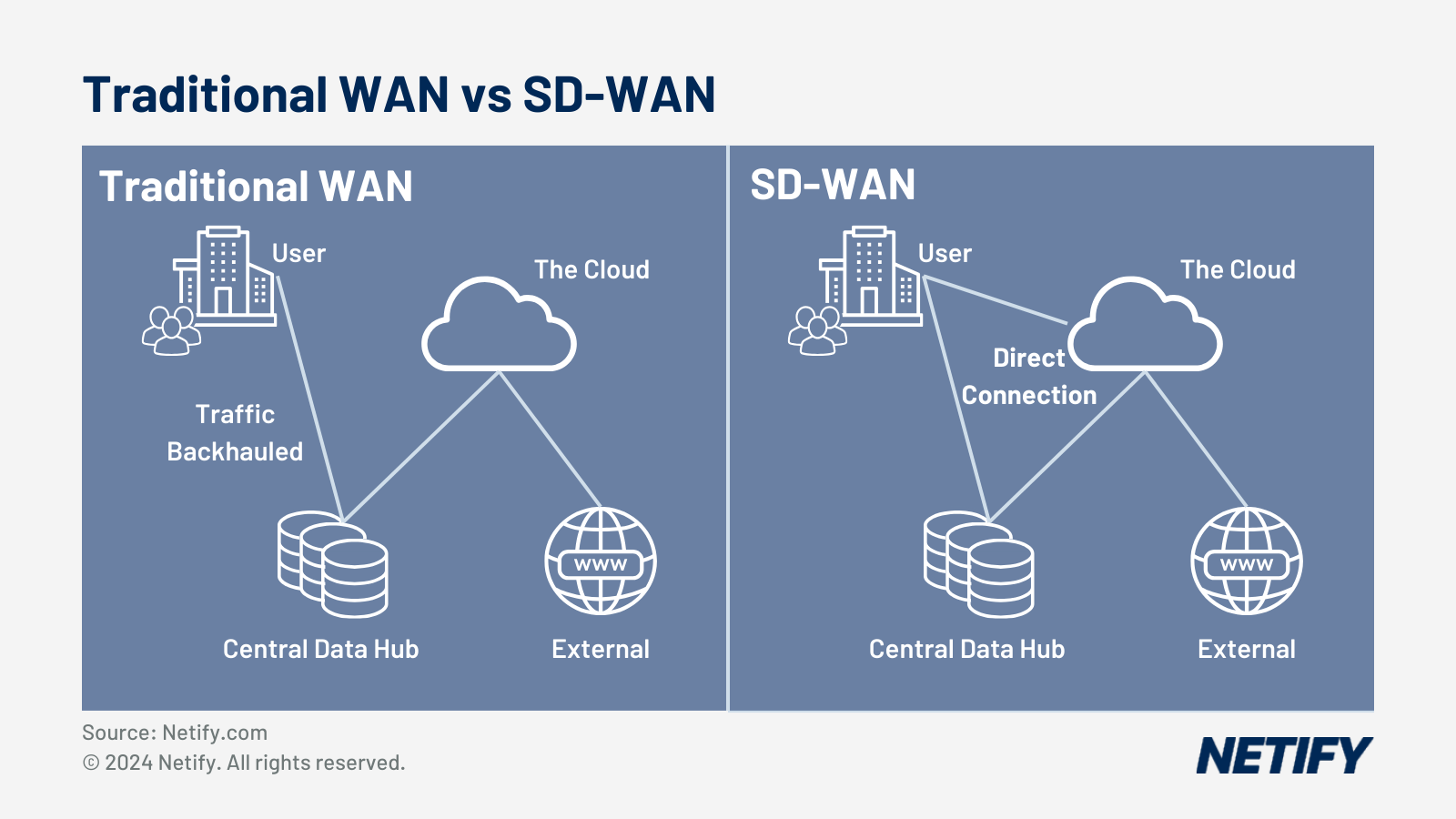
When retailers decide to transform their entire WAN infrastructure, replacing legacy MPLS with SD-WAN across hundreds or thousands of locations simultaneously , the logistics become overwhelming. Engineering capacity constraints limit deployment speed, scheduling coordination across time zones proves complex, travel costs accumulate rapidly, manual setup at hundreds of locations introduces configuration errors, and deployment timelines stretch across quarters or years.
For franchise operations, the challenge is made worse, with corporate IT teams often lacking direct control over franchise locations' infrastructure, requiring coordination with franchisees who may resist changes or lack technical staff. ZTP eliminates these constraints by shifting technical complexity from edge locations to the cloud.
According to market research, the Zero-Touch Provisioning market is expected to grow from $3.82 billion in 2024 to $10.59 billion by 2035, driven largely by SD-WAN deployments and distributed networks requiring automated configuration at scale.
The Step-by-Step ZTP Workflow
ZTP eliminates on-site technical work entirely by shifting all configuration to the cloud before hardware ships. This separation of technical work from physical installation enables deployment models where store-level staff require no networking expertise.
Cloud Staging
Before hardware leaves the warehouse, IT teams configure the complete SD-WAN deployment in the vendor's cloud management platform. This cloud staging involves creating the golden template - a baseline configuration applying to all stores including standard VLANs for payment systems, segmentation policies isolating the CDE, application priorities for traffic steering, and security policies including firewall rules. Rather than configuring policies separately at each location, the template defines them once and applies them consistently across every location.
Key Applications of Zero Touch Provisioning
The most common use case for Zero Touch Provisioning is within SD-WAN. ZTP enables retailers to quickly deploy new edge devices so that the network can be expanded across new locations. The benefit of ZTP for SD-WAN is that it can use a single configuration as a template, ensuring that different branch offices conform to consistent policies, regardless of the connectivity types, such as MPLS, broadband and 5G.
Challenges and Risks of Zero Touch Provisioning and How They're Mitigated
Although there are many benefits to utilising Zero Touch Provisioning, it is also important to consider the potential challenges it may introduce.
One of these challenges is the initial configuration with the ZTP server and definitions of policies. This often requires expertise in order to achieve and therefore, whilst ZTP reduces the complexity of network administrator workloads, it should be noted that some expertise may be required for the initial design of the ZTP implementation.
There are also physical security risks that should be considered. By deploying networks remotely, businesses should consider the security of the devices against unauthorised access or tampering, as this can lead to both a local and entire network breach.
Finally, the variability between vendors is significant and therefore not all ZTP implementations are built equally, are as easy to implement or offer the same range of features.
Want to learn more about SD-WAN for the retail industry?
Vendor Comparison: ZTP Implementations
Arista VeloCloud
VeloCloud implements ZTP through their Edge Cloud Orchestrator (VECO) platform. Service providers sign up for ZTP by registering their Partner Relationship Management (PRM) identifier, which takes up to one week for validation. Once validated, devices shipped to customers automatically appear in the "Pending Assignment" inventory.
The service provider pre-configures edge profiles and assigns them to customers through the orchestrator. When the edge device powers on with DHCP-enabled internet connectivity, it automatically discovers the orchestrator, downloads its configuration, and establishes secure fabric VPN connections.
Versa Networks
Versa offers three distinct ZTP methods, providing flexibility for different deployment scenarios:
- Global ZTP: Devices automatically discover and connect to Versa's cloud infrastructure without manual intervention
- URL-Based ZTP: Administrators provide a specific URL that the device contacts for configuration
- Script-Based ZTP: Requires minimal command-line interaction to initiate the staging process with specified controller IP addresses and WAN parameters
All methods follow a two-phase process: staging (establishing initial IPsec tunnel with the controller) and post-staging (receiving full configuration from Director and completing onboarding). Versa's architecture separates the Controller (data plane) from Director (management plane), requiring connectivity to both components for successful deployment.
Fortinet FortiGate
Fortinet provides ZTP through two primary paths: FortiCloud/FortiDeploy for smaller deployments and FortiManager for enterprise-scale operations. The FortiCloud approach allows devices to automatically contact Fortinet's cloud services using a pre-registered product key, downloading configuration templates upon first boot.
For enterprises, FortiManager's "Add Model Device" feature enables administrators to pre-provision virtual device representations with complete configurations. When a physical FortiGate with matching serial number connects, it undergoes "Auto-Link" - authenticating via serial number or pre-shared key, optionally upgrading firmware, and receiving its full configuration push. Fortinet also supports alternative discovery methods including DHCP options and USB-based provisioning for locations without reliable internet.
Pre-Deployment Readiness Checklist
Cloud Infrastructure
Configuration Templates
Network Prerequisites
Device Hardware
Security & Authentication
Testing & Validation
Operational Readiness
Pilot, Phased Rollout and Rollback Strategy
Successful ZTP deployment follows a three-stage approach that minimises risk, a pilot phase, rollout and rollback.
The pilot phase should deploy via Zero Touch Provisioning at 2-5 carefully selected locations (that each represent different store profiles) and will likely take a 2-4 week period in order to validate that templates provision correctly, devices authenticate successfully and end-to-end connectivity functions under production conditions. Pilot testing typically reveals site-specific issues such as unexpected cable configurations or restrictive firewall rules before they affect hundreds of locations.
Following successful pilot completion, phased rollout should begin, starting with non-critical locations to minimise business impact. Each wave should monitor success rates, time-to-operational metrics, and common failure patterns - if failure rates exceed 10-15%, deployment should be stopped for investigation and revision before proceeding further
Rollback procedures are arguably the most important, as they allow for rapid recovery from failed deployments. SD-WAN platforms often implement automatic rollback so that if devices cannot establish orchestrator connectivity within 5-10 minutes, they revert to previous configurations.
Lifecycle Management
Once ZTP deployment completes, ongoing lifecycle management maintains network health across your retail network. Centralised orchestrators simplify firmware updates, allowing administrators to schedule upgrades during maintenance windows and push new software versions to hundreds of devices simultaneously. Most platforms support phased upgrade strategies, such as testing updates on pilot sites and regular configuration backups to protect against data loss.
Conclusion
Zero-Touch Provisioning eliminates the logistical complexity and cost of coordinating engineer visits across hundreds of retail locations for SD-WAN deployment. By shifting configuration complexity to the cloud, retailers enable non-technical store managers to deploy enterprise-grade networking infrastructure through simple package delivery and basic cable connections. ZTP requires thorough upfront planning, including template design, pilot testing, and rollback procedures, but delivers substantial operational benefits: faster deployment timelines, consistent policy enforcement, reduced travel costs and simplified lifecycle management.

Harry holds a BSc (Hons) in Computer Science from the University of East Anglia and serves as a Cybersecurity Writer here at Netify, where he specialises in enterprise networking technologies. With expertise in Software-Defined Wide Area Networks (SD-WAN) and Secure Access Service Edge (SASE) architectures, Harry provides in-depth analysis of leading vendors and network solutions.
Fact-checked by: Robert Sturt - Managing Director, Netify
Frequently Asked Questions
What happens if a store manager connects cables incorrectly during ZTP installation?
Most common cabling errors prevent devices from obtaining internet connectivity, so provisioning simply doesn't start. The device remains in waiting state, and centralised monitoring alerts IT teams that provisioning hasn't completed within expected timeframes. Helpdesk staff can then guide store managers through checking cable connections.
Can retailers use ZTP for locations without reliable internet connectivity?
ZTP fundamentally requires internet connectivity for devices to reach the vendor's cloud controller and download configurations. For stores with no internet service yet installed, retailers must either pre-install connectivity before deploying SD-WAN, or implement a two-stage process where local IT contractors install internet services first, then ZTP handles SD-WAN provisioning.
Is ZTP suitable for franchise locations where the retailer doesn't control network infrastructure?
Yes, ZTP particularly benefits franchise deployments precisely because it minimises the retailer's dependency on franchisee technical capabilities. Corporate IT teams handle all configuration complexity in the cloud, whilst franchisees simply connect devices following pictorial instructions. This separation of concerns works well for franchise models where corporate IT wants to maintain network security and consistency without requiring franchisees to employ networking specialists.