
Unified SASE: Why Single-Vendor Architectures Matter in 2026 and the Latest Insights From Fortinet & Gartner
The latest insights from Fortinet and Gartner reveal that rather than piecing together multiple vendors, businesses are now opting for unified SASE architectures to benefit from more aligned security processes, greater operational efficiency and improved cost performance.
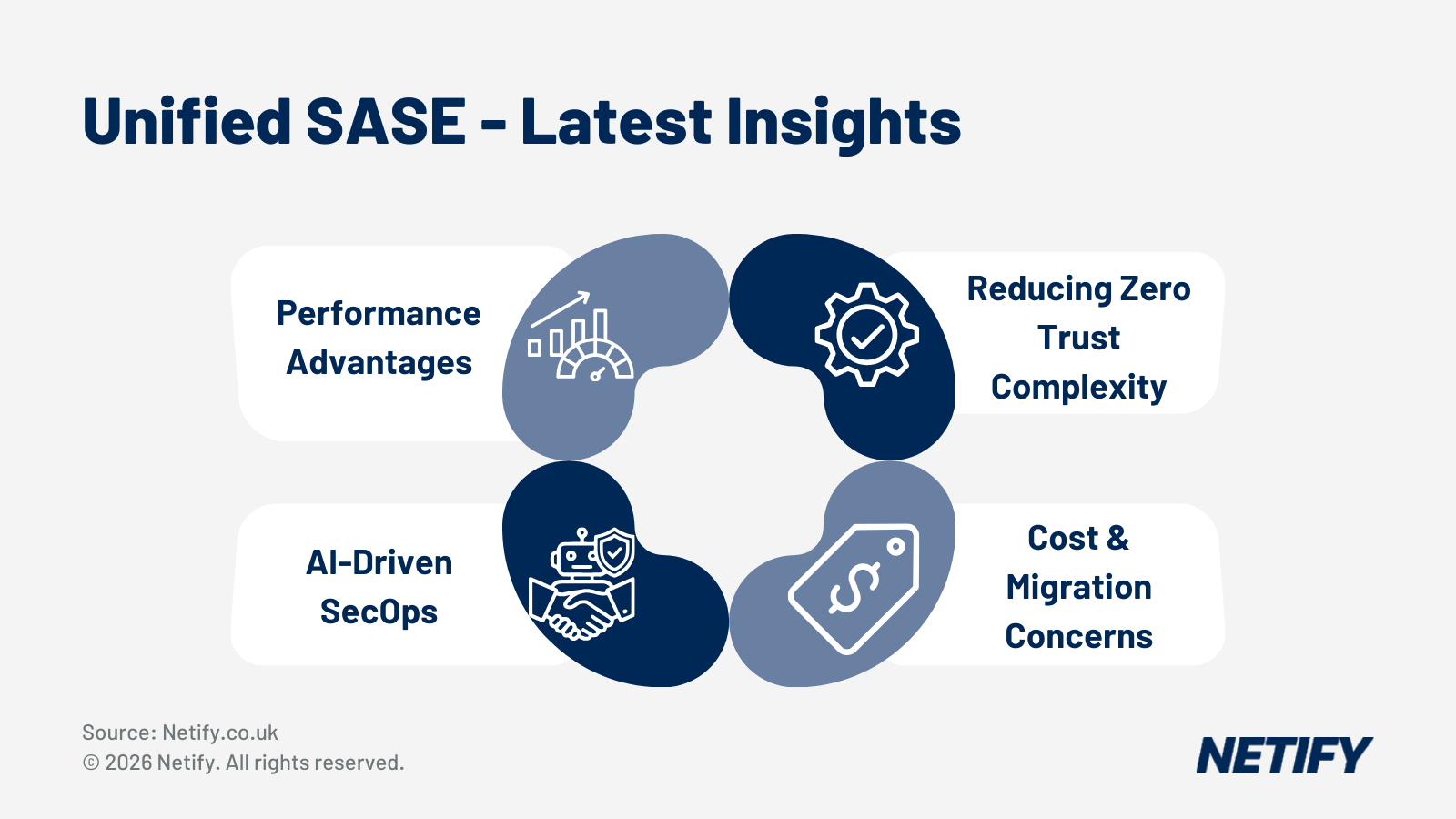
The latest insights from Fortinet and Gartner reveal that there has been a shift in how organisations approach Secure Access Service Edge (SASE) deployments - rather than piecing together multiple vendors, businesses are now opting for unified SASE architectures to benefit from more aligned security processes, greater operational efficiency and improved cost performance.
In this article, we'll cover the latest insights into unified SASE and why Fortinet and Gartner have suggested that the consolidation of SASE components will, in 2026, have seen an increase in uptake of over 50% since 2021.
Looking to build your SASE RFP? Why not give the Netify free SASE RFP builder a go today?
Single-Vendor SASE: What It Is and Why It Matters
Single-vendor SASE is a unified architecture that provides both networking and security services through a single provider. Unlike dual-vendor approaches that stitch together separate products via APIs, a unified SASE platform is built on a shared codebase with a single management console. This means SD-WAN and Security Service Edge (SSE) functions, such as ZTNA and Secure Web Gateways, work natively together without integration overhead.
Gartner research indicates that this consolidation is becoming the industry standard - by the end of 2026, 65% of enterprises are predicted to have transitioned away from fragmented security tools in favour of unified architectures. This shift allows organisations to apply identical security policies across all connection origins using a single configuration set.
The following table provides a direct comparison between the unified and dual-vendor models.
| Factor | Single-Vendor SASE | Dual-Vendor SASE |
| Example vendors | Fortinet Unified SASE, Cato Networks, Versa VersaONE | Zscaler & Cisco SD-WAN, Netskope & VMware |
| Management consoles | 1 (unified) | 2+ (separate for SD-WAN and SSE) |
| Policy consistency | Native (shared policy engine) | Requires API integration |
| Deployment complexity | Lower | Higher |
| Vendor dependency | Single point of failure | Diversified risk |
| Best-of-breed flexibility | Limited (use vendor’s stack) | High (choose best SD-WAN + best SSE) |
| Cost | Typically lower per-user | Typically higher (two licences) |
| Gartner recommendation | Preferred for mid-market | Accepted for enterprise |
Single-Pass Inspection and Performance Advantages
The biggest benefits of single-vendor SASE include improved security posture, administrative simplicity (with fewer consoles to manage), and traffic efficiency due to single-pass encryption and optimal routing decisions. With a unified platform, SSL/TLS inspection happens once within the same security stack performing threat prevention, data loss prevention and access control within a single system, whereas multi-vendor architectures typically require traffic decryption and re-encryption at each vendor or system boundary, which can introduce latency and create visibility gaps that allow threats to go un-inspected.
Implementing Zero Trust Without Complexity
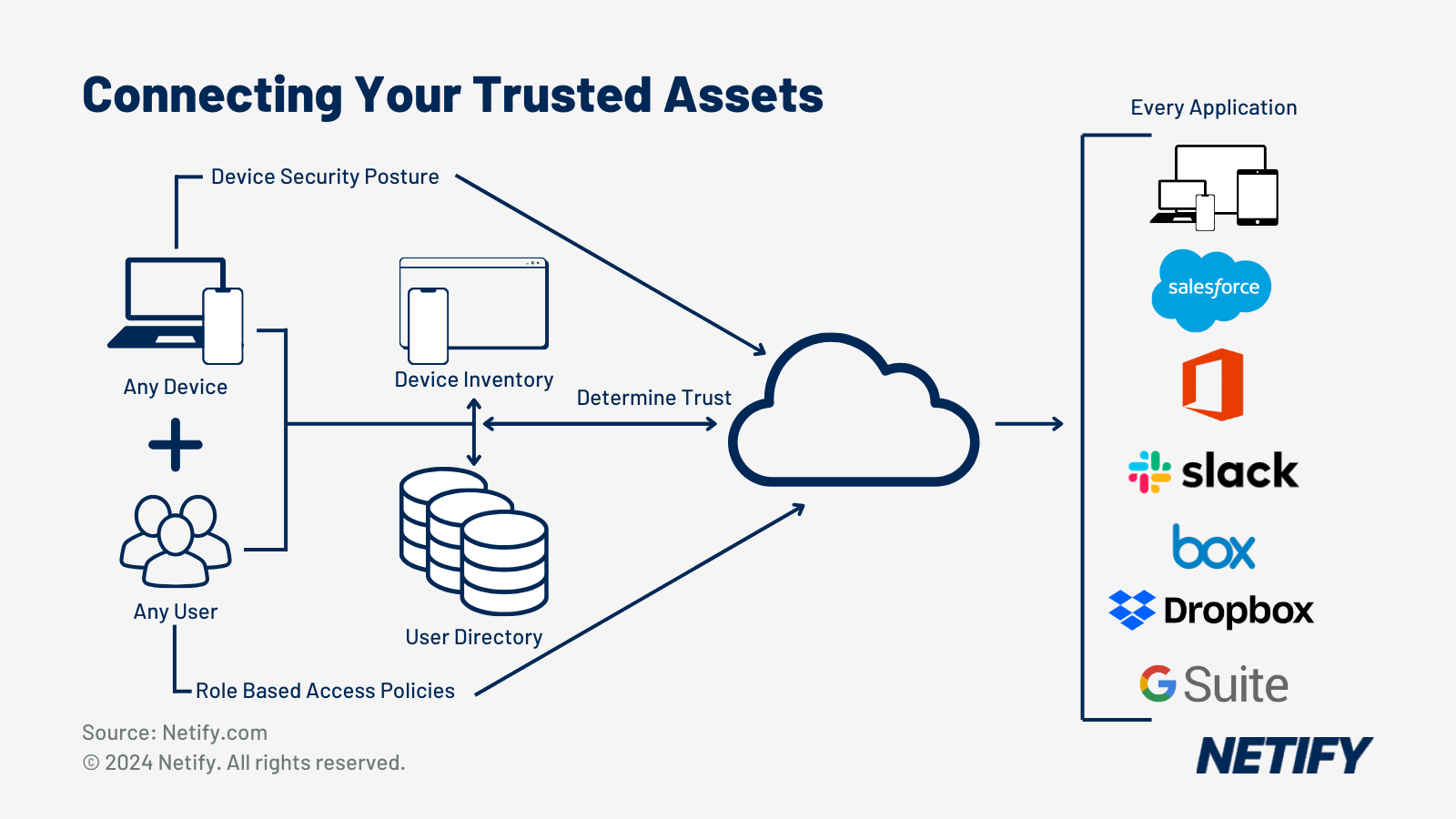
Unified SASE architectures are also ideal for simplifying Zero Trust implementation due to single configuration sets allowing the application of identical security policies regardless of connection origin.
Effective Zero Trust requires consistent policy enforcement across all edges, whether users connect from branch offices, home networks, or mobile devices. - Gartner
For example, Fortinet’s Universal ZTNA capability extends Zero Trust principles across both on-premises and cloud-delivered environments and, rather than maintaining separate ZTNA solutions for different use cases, organisations can enforce consistent identity verification, device posture checking and least-privilege access across their entire infrastructure.
Gartner SASE Insights for 2026
Gartner’s current position reflects the rapid convergence of SD-WAN and SSE into a single cohesive market. Research indicates that the operational burden of managing disparate systems is driving a major shift, with 50% of new SASE deployments expected to be single-vendor by 2028, up from 30% in 2025.
In terms of market leadership, the 2025 Gartner Magic Quadrant for SASE Platforms identifies Fortinet, Cato Networks, and Palo Alto Networks as current Leaders. These vendors are recognised for delivering a full SASE stack, including mandatory components such as SWG, CASB, and ZTNA, within a unified framework.
For a platform to qualify as full SASE in Gartner’s framework, it must integrate these SSE functions with SD-WAN and Firewall-as-a-Service (FWaaS) capabilities.
For large organisations with expiring dual-vendor contracts, Gartner anticipates that 30% will consolidate to a single-vendor platform by 2028 rather than renew separate agreements. This reflects a broader shift in procurement strategy, where reducing vendor complexity is being weighted alongside capability when making architecture decisions.
AI-Driven Security Operations
With the operational burden of managing security infrastructure growing as volume of threats that businesses face continue to increase, the utilisation of AI-driven security operations within SASE platforms has become a necessity. Through the likes of automated threat detection, as well as investigation and response capabilities, AI is being increasingly used, not just for threat intelligence at scale (and correlating indicators across emerging threats), but also through generative AI use cases to enable security analysts to more efficiently tackle events. Within a consolidated SASE architecture, this use of AI can be largely beneficial for not only protecting network assets but also automatically updating security policies across security system (SWG, FWaaS and ZTNA) components, all without requiring manual intervention.
SD-WAN Performance Optimisation
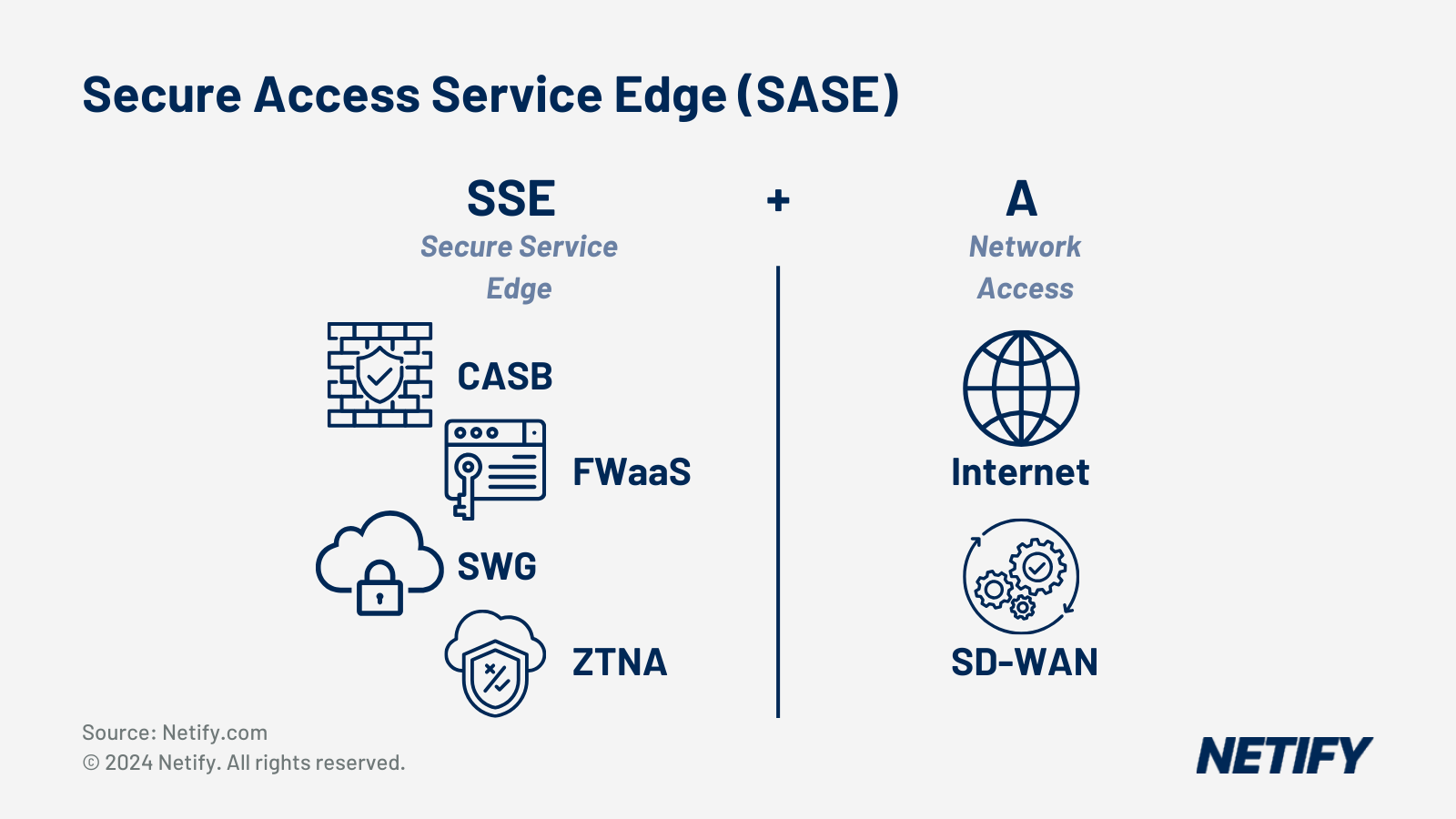
One of the key differentiators for SASE (and SD-WAN) solutions is their integration with major cloud platforms (Microsoft Azure, AWS, Google Cloud), as it can extends consistent security policies into cloud workloads whilst optimising connectivity through capabilities such as direct cloud on-ramps - which can be essential for organisations adopting cloud-first strategies. And for organisations with performance sensitive applications (such as voice services, video conferencing or real-time collaboration tools), the architecture of a unified SASE solution can be key to eliminating the need to trade off between security inspection depth and application performance, where traffic steering decisions incorporate both network path quality and security posture.
Addressing Operational Complexity
Gartner research indicates organisations struggle to recruit and retain security professionals with expertise across multiple vendor platforms. Unified SASE architectures reduce the breadth of vendor-specific knowledge required, allowing smaller security teams to operate effectively and, building further on that, for managed security service providers (MSSPs) supporting multiple clients, unified SASE platforms enable more efficient service delivery by standardising operational procedures across their entire customer base.
Cost and Migration Considerations
Whilst multi-vendor SASE architectures may appear to offer greater flexibility during the procurement phase, the overall total cost of ownership can often be cheaper for unified platforms once all operational expenses have been considered (and not to mention any fallout from potential security gaps that comes with patching together multiple platforms). And given organisations deploying unified SASE typically report significant reductions in time spent on security policy management, vendor coordination and troubleshooting integration issues, this only reinforces the notion that complexity is greatly reduced by leveraging a single vendor for the entire network.
However, many businesses may be hesitant for this kind of implementation due to the size of the deployment stage, however through SASE solutions that allow phased migrations, organisations can mitigate this factor by maintaining their existing investments whilst gradually moving towards a unified platform. For organisations considering this approach, Gartner recommends organisations prioritise migration of remote access and branch connectivity first, as these use cases often stand to benefit the most from unified SASE architectures.
Strategic Implications for UK Businesses
For organisations in the UK, two of the most common regulations to comply with are GDPR and PCI DSS - each bringing their own requirements for compliance. When considering a separated or unified security stack, businesses should consider that, by consolidating the vendor stack, they can benefit from the consistent policy enforcement and centralised audit capabilities that unified SASE provides.

Harry holds a BSc (Hons) in Computer Science from the University of East Anglia and is ISC2 Certified in Cybersecurity (CC). He serves as a Cybersecurity Writer here at Netify, where he specialises in enterprise networking technologies. With expertise in Software-Defined Wide Area Networks (SD-WAN) and Secure Access Service Edge (SASE) architectures, Harry provides in-depth analysis of leading vendors and network solutions.
Fact checked by: Robert Sturt - Managing Director, Netify
Frequently Asked Questions
What is single-vendor SASE?
Single-vendor SASE is a cybersecurity architecture that delivers both SD-WAN networking and SSE security functions through a single, cloud-native platform. The primary benefit is administrative simplicity: IT teams can manage all security policies and network routing from a centralised console. This unified approach eliminates the latency and visibility gaps that arise when traffic must pass between different vendor systems.
Which vendors offer single-vendor SASE?
Several vendors provide fully integrated single-vendor SASE platforms.
- Fortinet offers Fortinet Unified SASE, built natively on the FortiOS operating system.
- Cato Networks provides the Cato SASE Cloud Platform, which runs on a purpose-built global private backbone.
- Palo Alto Networks delivers Prisma SASE, which includes AI-driven network insights.
- Versa Networks offers the VersaONE Universal SASE Platform, with a unified data lake and AI-informed traffic steering.
Vendor product names and offerings can change frequently, so we'd recommend checking current specifications directly with each provider.
What is the main benefit of single-vendor SASE?
The main benefit is operational simplicity and greater integration of security systems. This setup helps to eliminate potential integration gaps or blind spots and reduces latency through the likes of single-pass inspection.
What does Gartner say about SASE in 2026?
Gartner views SASE as the essential framework for securing a distributed workforce, predicting that 65% of enterprises will have adopted unified architectures by 2026. Their research points to a clear trend toward single-vendor solutions, which are expected to account for half of all new SASE deployments by 2028.
Is single-vendor SASE better than dual-vendor?
The answer depends on the organisation’s existing infrastructure and procurement position.
- Single-vendor SASE is generally the better fit for organisations seeking operational simplicity, a unified management console, and consistent policy enforcement across all edges.
- Dual-vendor SASE may be preferable where an organisation has a significant remaining investment in an existing best-of-breed SD-WAN or SSE platform, or where a specific security capability from a specialist vendor is a hard requirement.
Gartner acknowledges both approaches, but notes that dual-vendor architectures introduce integration overhead and potential visibility gaps at the SD-WAN and SSE boundary.
How does Fortinet handle ZTNA?
Fortinet offers Universal ZTNA, which applies the same identity-based security policies to users whether they are in the office or remote.
Why should I listen to insights from Gartner and Fortinet?
Gartner is the world’s leading research and advisory firm, providing the industry standard for market trends through their "Magic Quadrants."
Fortinet is a global leader in integrated cybersecurity and networking.
Through their combined insights you can align your business strategy with verified market shifts and proven industry experience.