
SD-WAN for Food Retail: Connectivity, PCI Compliance & Store Resilience
With food retails facing the task of not only optimising for perishable goods but also tackling the likes of PCI compliance and always-on store experiences, SD-WAN has become an essential network component.
With food retails facing the task of not only optimising for perishable goods but also tackling the likes of PCI compliance and always-on store experiences, SD-WAN has become an essential network component.
Who this guide is for
IT decision-makers in grocery, convenience, wholesale and quick-service restaurant chains managing multi-site connectivity, store operations and compliance requirements.
What you’ll be able to decide by the end:
- Whether SD-WAN is the right approach for your estate
- Which architecture pattern fits your environment (DIA, backhaul, hybrid)
- What retail-optimised should mean in vendor demonstrations
- How to pilot and roll out without disrupting trading
Looking to build a SD-WAN or SASE RFP for retail?
Why Does Network Dead Air Hurt Food Retailers More Than Other Sectors?
Food retail downtime isn’t just lost sales - it also poses an increased risk of spoilage (especially when systems such as cold-chain monitoring are disrupted) - all of which adds up to create a greater loss for your business. However, with SD-WAN’s capabilities, you can ensure more reliable connectivity for everything from payments and inventory management to workforce applications and IoT devices.
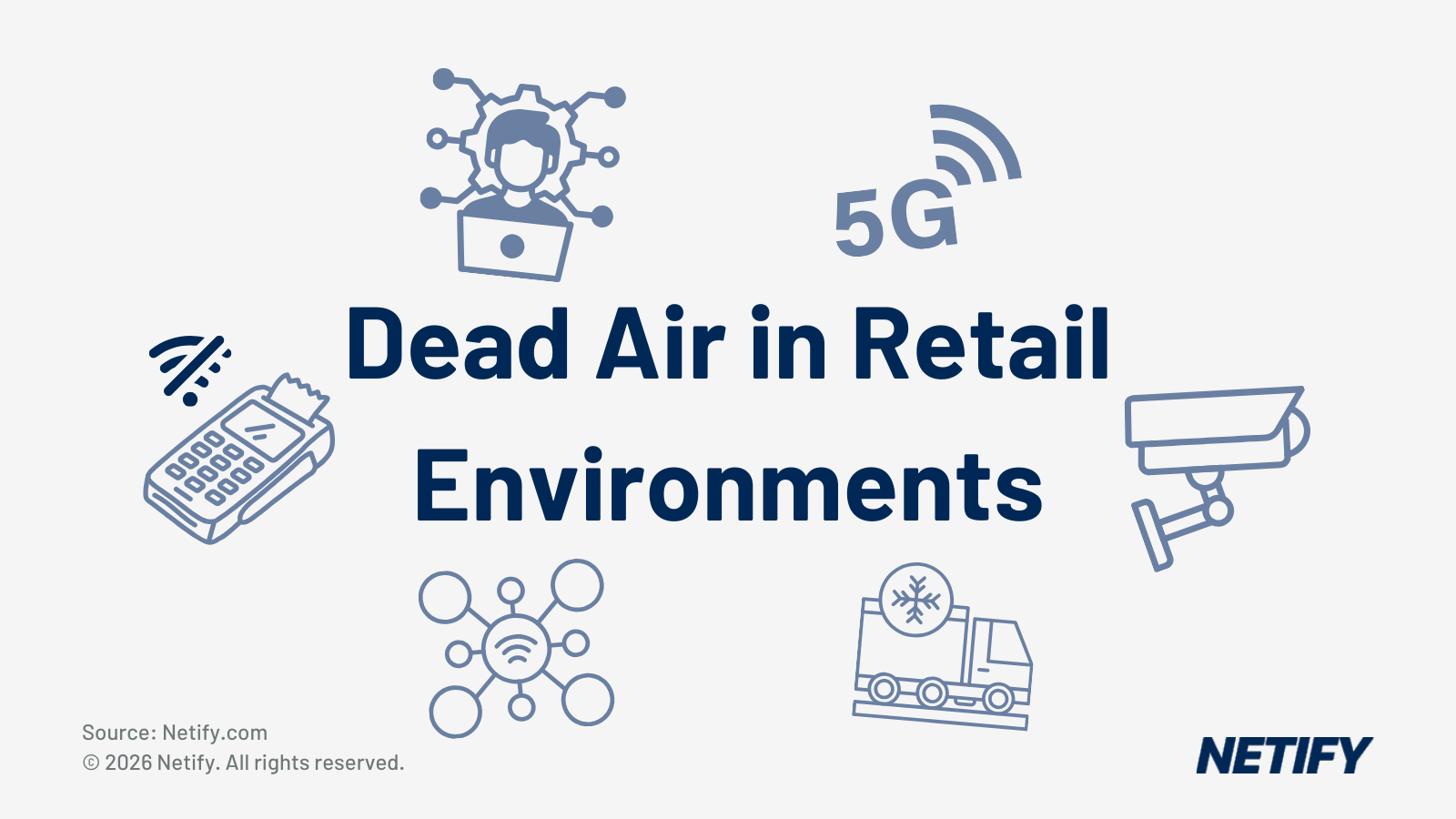
What dead air looks like in stores:
- PoS systems experiencing latency or going offline (especially during peak trade times)
- Guest Wi-Fi and staff devices consuming bandwidth that would ideally be designated to more important processes
- Cold-chain alerts getting delayed or missed
- CCTV feeds that are unreliable or experience degradation
- Shadow fixes by non-IT staff that move away from standardised configurations (causing an increase in risk and configuration drift)
And with many food retailers still relying on costly MPLS circuits, SD-WAN is all the more a great strategic shift to not only reduce costs but also to enable smart store operations with more resilient, secure connectivity scale.
SD-WAN should protect trading during peak network usage by applying application-aware routing and policy-based prioritisation so that the likes of POS/payment flows remain stable even when guest Wi-Fi, online order traffic and downloads peak.
The 3 PM rush combines guest Wi-Fi demand increases (video, streaming, social), online order workflows syncing at store level (pick lists, substitutions, updates), price updates and inventory syncs running in background and payment authorisations peaking concurrently.
What to look for in vendor responses: Clear POS/payment application identification (not manual IP lists only as this adds significant administrative complexity at scale), priority and shaping policies enforced consistently across all stores and evidence that the solution measures path quality (loss/jitter/latency) and reacts automatically.
Do We Actually Need SD-WAN for Our Food Retail Estate?
We’d strongly recommend SD-WAN if you operate over many sites, rely on cloud apps, need consistent segmentation or if you want resilient multi-link connectivity with central policy control.
Whilst smaller food retailers may still be able to achieve good enough quality with dual ISPs and a simpler edge, you’ll still lack the standardisation and application-aware traffic control of SD-WAN that reduces network complexity and makes growth to new sites simpler.
Signs SD-WAN is typically worth it:
- Frequent outages or inconsistent performance across stores
- Increasing cloud/SaaS reliance (inventory, workforce, ERP, ordering)
- High operational overhead for changes and troubleshooting
- Compliance pressure and need for auditable segmentation
- Multi-link strategy (broadband plus fibre plus LTE/5G) is becoming mandatory
What Must an IT Decision-Maker Consider Before Selecting an SD-WAN Solution?
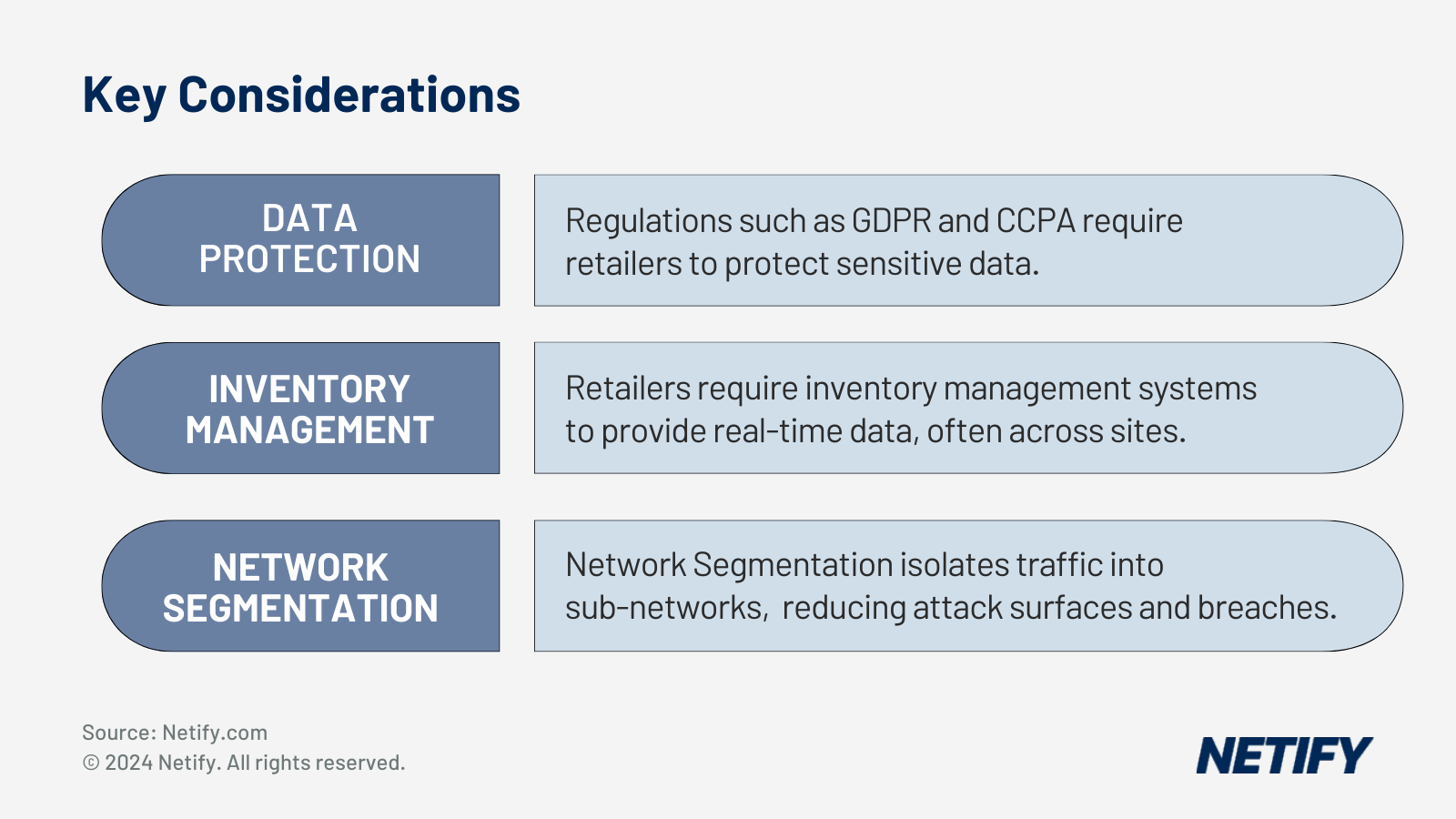
Before shortlisting vendors, there are several architectural and operational considerations that will determine your requirements and whether a vendor's solution fits your operational model. We'd recommend treating each consideration below as a decision gate in order to prevent expensive mid-deployment course corrections.
How Does SD-WAN Support Cold-Chain and IoT Requirements?
Cold-chain monitoring typically consists of low-bandwidth, high-importance telemetry that must receive priority over bulk traffic, yet without the complexity of manually configuring policies for every individual sensor across hundreds of stores - for example, a freezer failure alert that needs to reach your facilities team within seconds can't be queued behind guest Wi-Fi activities.
Whilst this sounds like a given, we'd warn that generic SD-WAN solutions can sometimes treat all non-POS traffic with similar priority unless explicitly configured otherwise. Therefore, it's important to consider how vendors' solutions enable cold-chain and IoT telemetry and how these can bypass network congestion - especially during peak hours.
What Does Zero-Touch Provisioning at Scale Really Mean?
Zero-touch provisioning enables hardware to be sent to a site, allowing a store manager or general floor employee (not a network engineer) to unpack the appliance, connect clearly labelled cables and have that device automatically configure itself based on templates defined centrally by your network administration team.
For more information about ZTP at scale in retail environments, we'd recommend the below article.
 Harry Yelland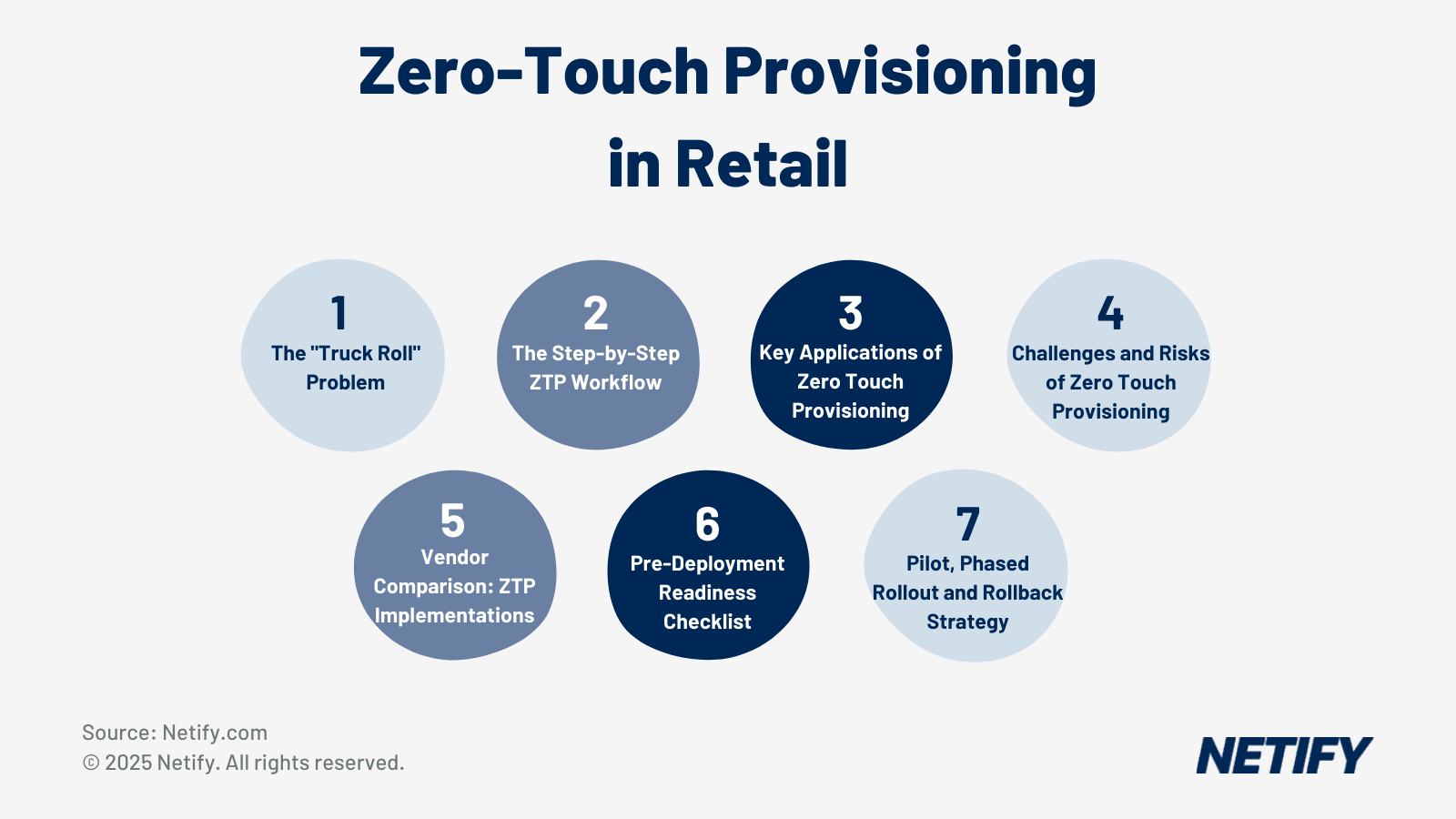
Explained: How Zero Touch Provisioning can enable quicker store rollouts for retail.
How Do We Handle Franchise versus Corporate Security Posture?
Franchise models offer face greater governance and compliance issues than corporate deployments and this can be reflected by the varying levels of franchise support that SD-WAN vendors offer.
The minimum requirement that we'd suggest franchise retailers look out for is centralised policy management with role-based access control that draws clear boundaries between what corporate controls (PCI segmentation, IoT isolation, security policies, firmware management) and what franchisees can potentially modify (guest Wi-Fi SSIDs, bandwidth allocations for non-CDE networks, local printer configurations). Without this separation, you either give franchisees too much access, which can in turn create compliance and security risks, or too little access, which can lead to franchisees generating constant support tickets for trivial changes that they could otherwise handle themselves with greater control.
What Does Cloud-Native Architecture Mean for Food Retail SD-WAN?
Cloud-native SD-WAN optimises paths to SaaS platforms and cloud services without forcing unnecessary traffic through headquarters. The traditional model where every packet routes through your data centre made sense when applications ran on-premises, however today when inventory management, workforce scheduling and digital ordering platforms run in the cloud, backhauling that traffic through HQ adds latency, creates bottlenecks and introduces unnecessary dependencies.
We'd therefore recommend that retailers consider direct internet access (DIA) or local breakout capabilities, where trusted cloud applications route directly from stores to their cloud destinations. This improves application performance through lower latency, reduces bandwidth requirements at central sites and increases resilience as stores become less dependent on headquarters connectivity.
However, one caveat to implementing DIA is that, without proper controls, it can create security and compliance risks - you need granular policies defining which applications are trusted enough for direct access versus which must route through central inspection points.
Should We Choose Secure SD-WAN or SD-WAN Plus Separate Firewalls?
This decision comes down to operational ownership rather than technical superiority. Secure SD-WAN (integrated firewall functionality) and SD-WAN plus separate firewall appliances are both valid approaches with different operational implications that need to match your team structure and governance model.
Secure SD-WAN consolidates firewall, routing and SD-WAN functions into a single appliance, reducing complexity when the integrated security capabilities meet your requirements and your team structure supports unified policy management. You're deploying one device per store instead of two, managing one set of policies instead of separate networking and security policies, and troubleshooting one system. For many food retailers, particularly those without dedicated security operations teams distinct from network operations, this consolidation makes sense.
However, separate firewalls may be preferable if you require advanced threat prevention capabilities beyond basic stateful inspection and aren't considering some of the more security-focused SD-WAN vendors on the market. Especially if you have established security operations teams with deep firewall expertise, or if governance requires strict separation of duties between networking and security functions.
If you're considering combined, we'd recommend looking into Secure Access Service Edge (SASE) - instead of running heavy security processing (like deep packet inspection) on a physical appliance, SASE moves these functions to a cloud-native security stack, allowing for a thin edge model where all of the security's heavy-lifting is done in the cloud.
What Resilience Design Details Matter Specifically in Food Retail?
Resilience in food retail is predominantly about protecting trading operations under real-world conditions (such as fibre cuts, power fluctuations during storms, mobile operators experiencing local congestion and the unpredictability of consumer-grade broadband that many stores now depend on).
We'd suggest that the minimum requirement should be dual ISP strategy with diverse last-mile providers where physically possible - fibre from one carrier plus broadband from a different carrier, ideally taking different physical paths. In locations where true diversity isn't available (common in rural areas or older retail parks), LTE/5G backup is therefore a necessity.
Beyond circuit diversity, what matters most is tested failover and failback behaviour under realistic conditions. For example, link flapping (where connections repeatedly switch between circuits due to marginal quality differences) can be worse for POS stability than a clean failover to backup.
What SD-WAN Architecture Patterns Work Best for Food Retailers?
Choosing an architecture pattern is about selecting the approach that aligns with your specific constraints, risk tolerance and application dependencies.
What Is a Reference Architecture for a Typical Grocery Chain?
A reference architecture provides the foundational components that virtually every food retail SD-WAN deployment requires. This includes:
- Choosing between deploying SD-WAN appliances or utilising an integrated secure SD-WAN platform
- Setting up different policies for different store/site types via centralised management
- Network segmentation (often at store level) to create distinct zones.
- Cloud/SaaS breakout and connectivity strategies.
When Should We Use Local Internet Breakout (DIA) from Stores?
Local internet breakout makes most sense when stores depend heavily on cloud applications and SaaS platforms where routing traffic through headquarters creates unnecessary latency and bottlenecks. If your point-of-sale, inventory management and work scheduling systems are all cloud-based, forcing all that traffic through your data centre adds hops, increases latency and creates a single point of failure at headquarters.
By moving to DIA, stores become less dependent on headquarters connectivity, so an outage at your central site doesn't prevent cloud application at other sites. Alongside this, you're also reducing bandwidth requirements at headquarters, which can help defer expensive circuit upgrades as your store count grows.
However, implementing local breakout without proper controls creates security and compliance risks. Every store effectively becomes an internet edge point, which means you need greater segmentation enforcement at every location ensuring guest and IoT networks cannot touch your CDE, as well as logging and visibility despite distributed breakout points and consistent security policy enforcement all locations.
When Should We Backhaul Traffic to HQ or a Private Backbone?
Headquarters backhaul remains appropriate when you have significant legacy on-premises application dependencies, when your security and compliance frameworks demand centralised inspection and control, or when your operational team structure concentrates security operations centrally rather than distributing them across sites.
The primary benefit of this is maintaining familiar security patterns where all internet-bound traffic passes through central inspection points and this simplifies compliance auditing because you can demonstrate that traffic doesn't reach the internet without traversing your security stack (and it provides a clear integration point for legacy applications that were architected assuming traffic would route through corporate infrastructure).
However, as we highlighted in the above DIA section, we'd recommend against backhauling all traffic 'for the sake of backhauling' and would recommend considering a hybrid approach where local breakout is available for trusted cloud applications but specific application categories (legacy on-premises systems, applications touching particularly sensitive data) are explicitly configured to backhaul through headquarters.
How Should Franchise or Concession Models Be Designed?
Franchise architectures require thinking about SD-WAN deployment through two distinct perspectives - the corporate infrastructure that franchisees cannot modify and the franchise-managed elements where they need operational autonomy.
The basis should be that corporate should be in control of the overlay networks for anything touching PCI scope, security-critical infrastructure or centralised monitoring. This means that your POS/CDE network, IoT/cold-chain monitoring and CCTV/physical security networks use corporate-managed encryption, corporate-defined segmentation policies and corporate-controlled access lists, audit trails log every attempted change, policy violations trigger automated enforcement, and central security operations have complete visibility across all franchise locations.
Where franchisees can potentially have more autonomy is in non-security-critical elements, such as guest Wi-Fi SSIDs and marketing content (though bandwidth controls will most likely remain corporate-mandated), certain back-office network configurations that don't touch CDE scope (printers, local file shares, non-POS business systems), and operational parameters like maintenance windows within corporate-defined boundaries.
 Harry Yelland
Deeper Dive: What to include in an SD-WAN & SASE RFP
How Do We Build the Business Case and ROI for SD-WAN in Food Retail?
When building a business case for SD-WAN, you should combine trading resilience, operational efficiency and compliance reduction into your considerations - not just generic circuit savings. We'd suggest that you therefore model any ROI based on elements like reduced downtime, fewer truck rolls, reduced helpdesk tickets and controlled MPLS dependency reduction - all facets that SD-WAN can improve and can have a wider financial effect than the scope of circuit savings.
How Do We Compare CapEx versus OpEx for SD-WAN?
Depending on how your business operates, it may be worth considering how SD-WAN can be compared based on CapEx or OpEx models. The key factors for this typically include hardware refresh versus subscription licensing, managed/co-managed services versus internal operations capacity and multi-link recurring costs (second line, LTE/5G plans). We'd suggest that CapEx models suit organisations with depreciation preferences and established hardware refresh cycles, whilst OpEx models provide predictable monthly costs and simplified budgeting.
What Is an MPLS Shedding Model and Why Does It Work?
Instead of a hard cut from MPLS to broadband, many retailers adopt a hybrid state where MPLS is reduced to critical flows whilst broadband links carry bulk traffic, allowing business to transition over time to SD-WAN, immediately lowering cost whilst allowing for any issues to be determined early and maintaining confidence during transition.
How Does SD-WAN Reduce Helpdesk Tickets and Operational Load?
One of the main ways that SD-WAN assists reduce operational load is through central visibility and policy standardisation, which can reduce misconfigurations between sites, allow for quicker responses to outages and prevent issues via health-based routing. On top of these, AIOps is becoming more and more integrated into SD-WAN, moving to a more predictive model, allowing analysis of systems to prevent system downtime through predicting when maintenance is required.
What Does Retail-Optimised SD-WAN Mean Compared to Generic Office SD-WAN?
Food retail SD-WAN must prioritise POS stability, cold-chain alerting, segmentation for compliance and resilience under peak trading conditions - rather than simply keeping email and conferencing online. Generic office SD-WAN optimises for productivity applications with best-effort resilience, typically implements simpler segmentation (corporate versus guest) and assumes downtime creates inconvenience rather than revenue loss.
In contrast, retail-optimised SD-WAN should deliver sub-second failover with payment session persistence, automated IoT alert prioritisation over bulk traffic, PCI-aligned segmentation templates (preventing scope expansion) and operational visibility distinguishing between ISP issues and in-store LAN problems.
 Harry Yelland
Uncovered: The need for Active-Active SD-WAN in retail environments.
How Should We Evaluate SD-WAN Vendors for Food Retail?
What Shortlisting Criteria Should We Use for Food Retail?
- Proven resilience and predictable failover/failback
- Segmentation model that supports PCI scope control
- ZTP plus templates plus drift management at scale
- Operational visibility and fast fault isolation
- Cloud path optimisation aligned to your app stack
- Support model fit (DIY versus co-managed versus fully managed)
What Questions Should We Ask in Vendor Demos?
- Show how you prioritise POS during congestion without manual per-store tuning
- Show your segmentation template for POS/CDE versus guest versus IoT versus CCTV
- Show how you produce audit evidence: change logs, policy reports, access logs
- Show failover and failback behaviour under real packet loss and jitter
- What happens if the management portal/controller is unreachable?
- How do you troubleshoot: ISP versus Wi-Fi versus LAN versus POS vendor issue?
What Proof Points Should We Require Before Purchase?
- Retail references (preferably grocery/food)
- Example deployment plan and cutover runbooks
- Sample incident report and monitoring dashboard outputs
- Clear support SLAs and escalation paths
- Clear security responsibility matrix (RACI)
What Is a Safe Implementation Roadmap for SD-WAN in Food Retail?
A phased rollout reduces trading risk. Start with discovery, then pilot in representative stores, operate hybrid during transition and roll out in waves with strong rollback and validation procedures.
What Should We Audit Before Any Deployment?
Audit scope includes store device inventory (expect surprises), network segmentation reality versus diagram, circuits per store and performance history, critical apps and flows (POS, payments, inventory, voice, IoT, CCTV) and security and compliance constraints (logging, retention, access control).
What Are the Most Common Pitfalls When Deploying SD-WAN in Food Retail?
Most failures come from under-testing resilience, under-designing segmentation and over-complicating rollout operations.
- Under-sizing appliances (encryption/inspection throughput)
- Testing failover but not failback (link flapping breaks POS stability)
- Flat networks that expand PCI scope and risk
- Treating IoT as low risk (it often becomes the weak link)
- LTE/5G added without cap controls and policies
- Over-customising per store leading to drift and inconsistent behaviour
What KPIs Prove SD-WAN Success in Food Retail?
Use metrics that reflect trading continuity, operational efficiency and compliance posture - measured per store and across the estate.
- Outage minutes per store per month
- POS transaction failure rate during WAN events
- MTTR (Mean Time to Resolve) for store incidents
- Ticket volume reduction and truck rolls avoided
- Segmentation coverage and audit findings reduction
- Cloud/SaaS performance consistency (latency/jitter/loss trends)
What Comes After SD-WAN: The Store of the Future?
Given all of the new technologies that retailers are utilising, SD-WAN is an ideal foundation for higher-bandwidth, higher-automation stores and enables greater use of computer vision, real-time inventory, richer digital signage and more reliable edge computing, all whilst scaling without added complexity.
Given this, SD-WAN gives retailers the perfect infrastructure to not only implement all of today's cutting edge technologies, but also provides a basis for implementing future technologies that traditional WAN would be severely unprepared to handle.
Want to learn more about SD-WAN for the retail industry?

Harry holds a BSc (Hons) in Computer Science from the University of East Anglia and is ISC2 Certified in Cybersecurity (CC). He serves as a Cybersecurity Writer here at Netify, where he specialises in enterprise networking technologies. With expertise in Software-Defined Wide Area Networks (SD-WAN) and Secure Access Service Edge (SASE) architectures, Harry provides in-depth analysis of leading vendors and network solutions.
Fact checked by: Robert Sturt - Managing Director, Netify