
Beyond Failover: Why Retailers Need "Active-Active" SD-WAN (Not Just 4G Backup)
When internet connectivity fails at a retail location, the impact can be catastrophic – in stores during peak hours, a five minute outage can result in abandoned trolleys and lost sales.
When internet connectivity fails at a retail location, the impact can be catastrophic – in stores during peak hours, a five minute outage can result in abandoned trolleys and lost sales. Whilst traditional backup approaches tend to treat internet redundancy as secondary infrastructure (such as a 4G/5G connection that sits dormant and untested until the primary line fails), this simply doesn’t work for modern retail operations, especially when the likes of click-and-collect orders, ship-from-store fulfilment, digital loyalty programmes and cloud-hosted inventory systems all depend on continuous connectivity.
In this article we’ll explain why retailers should move away from traditional backup and why they require active-active SD-WAN architectures that pro-actively detect and mitigate connectivity issues before they impact operations.
Looking to build a SD-WAN or SASE RFP for retail?
The Myth of "Backup" vs. The Reality of SD-WAN
As we’ve already alluded to, the traditional mitigation method for failover is to install a primary internet circuit, add a 4G modem as backup and configure basic failover logic. This process would often consume up to several minutes depending on configuration complexity and mobile network responsiveness, which in a retail setting can cause payment terminals to lose connection to authorisation services. By the time 4G backup activates, the operational damage has occurred - customers have experienced service disruption and in extreme cases simply left without completing purchases, with retailers often unable to quantify lost revenue from abandoned transactions.
SD-WAN moves away from this model by eliminating the concept of primary and backup circuits and instead, both connections operate simultaneously in active-active configuration, with the SD-WAN overlay continuously monitoring each link's performance (latency, jitter and packet loss) to dynamically steer traffic across whichever path provides optimal experience for each application. This means that, when a traditional ‘primary connection’ starts to degrade, SD-WAN doesn't wait for complete failure to react, it detects performance deterioration as it’s happening and proactively moves traffic to 4G before the user experience is disrupted.
Legacy routers lack the sophistication to detect these brownout conditions where connectivity remains technically active but performance degrades below application requirements. SD-WAN monitoring capabilitiesidentify these issues in real-time, maintaining application performance through intelligent path selection rather than waiting for catastrophic failure that triggers basic failover mechanisms.
"Active-Active" Configuration Explained
One of the key ways to mitigate these issues is with active-active SD-WAN, which operates all available network connections simultaneously and distributing traffic based on application requirements, current performance metrics and business policy rather than treating connections as primary and secondary tiers.
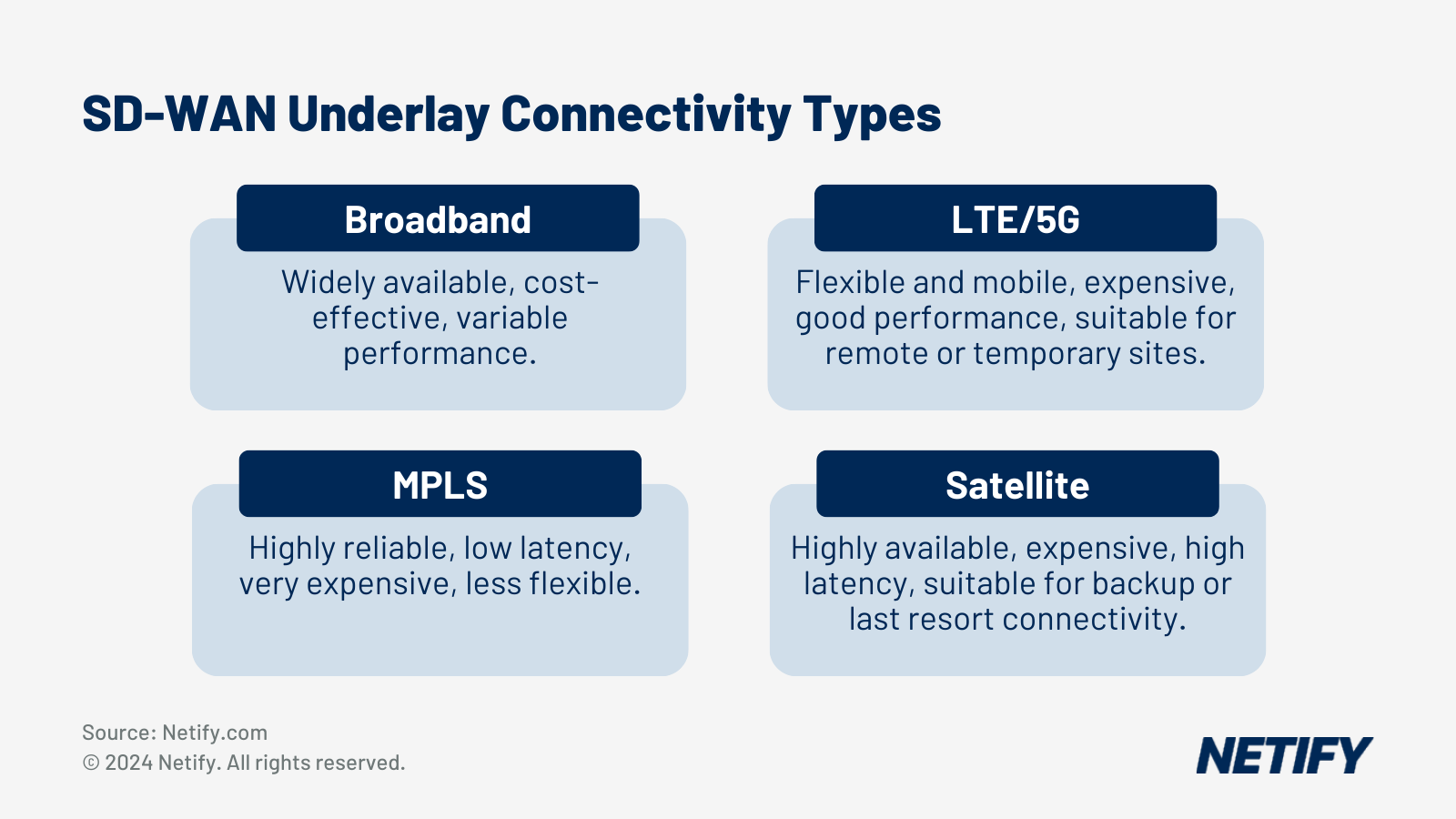
This dynamic routing operates continuously, with SD-WAN reassessing link quality every few seconds and adjusting traffic flows without manual intervention or user-perceptible disruption - when one link degrades, affected applications migrate to the healthier connection automatically.
For essential activities (such as credit card authorisation), advanced SD-WAN platforms offer packet duplication functionality and forward error correction, with whichever packet that arrives first at the payment processor being accepted whilst the duplicate discarded. By utilising this approach, retailers can guarantee transaction success even if one link experiences packet loss or delay, providing 100% resilience for revenue-critical traffic without relying on retransmission mechanisms.
Managing the Cost of 4G/5G (Metered Connections)
For metered connections, active-active configurations can be problematic for bandwidth consumption - when 4G/5G links sit idle as passive backup, they incur only baseline monthly fees regardless of actual usage. However, when carrying active traffic, data consumption can build up rapidly - with guest Wi-Fi, software updates and video surveillance uploads often generating hundreds of gigabytes monthly, any of these running over active-active connections can incur huge charges and eliminate the operational savings that SD-WAN deployments aim to achieve.
To prevent these issues, rather than allowing unrestricted access to metered connections, retailers should implement tiered policies that balance requirements against cost implications. We've detailed below how we'd suggest splitting up your retail traffic:
Revenue-Critical Applications
Payment terminal traffic, card authorisation requests and POS communications receive unrestricted access to all links including metered 4G/5G connections. These applications generate minimal bandwidth consumption but deliver disproportionate business impact, making mobile data costs irrelevant compared with revenue protection.
SD-WAN platforms enforce these priority systems through application identification and traffic steering rules that recognise each process and use that context to compare against the policies you set out automatically.
Another key benefit of leveraging SD-WAN is that, for retailers operating hundreds or thousands of locations, centralised policy management capabilities allow changes to application priorities or mobile data budgets to deploy across all branches from a single controller rather than requiring individual site configuration.
Want to learn more about SD-WAN for the retail industry?
The Real Cost of Downtime in Retail
Network downtime costs extend beyond immediate lost transactions to encompass operational disruption, staff productivity impact and long-term customer satisfaction effects that prove difficult to quantify. When payment systems fail, staff cannot process any card transactions - forcing a loss in sales, click-and-collect customers cannot retrieve orders because systems cannot verify payment and returns processing halts without access to transaction history.
These effects are only made worse during peak periods where downtime impact can often multiply (such as Black Friday, Christmas shopping periods, or even the lunchtime rushes lr weekend peak hours).
Industry research quantifies these impacts substantially - unplanned outages now average £14,056 per minutefor enterprises and for retailers, these figures translate not only to lost transactions but also to reputational damage, as customers who experience payment system failures during checkout may choose competitors for future purchases rather than risk repeat disruption.
Observability & NOC Workflows
With the primary aim of active-active SD-WAN is to move from reactive troubleshooting to proactive management to avoid the above risks, this operational model requires visibility into connectivity status across your environment.
SD-WAN controllers provide centralised visibility into every store's connectivity status, allowing operations teams to easily identify which locations experience degraded links, increased latency or packet loss that might impact service quality.
Through this centralised platform you’ll automatically be notified when issues arise - minor blips get logged for pattern analysis, genuine problems trigger investigation and serious failures escalate immediately with tickets created automatically.
Store-Level Business Continuity Playbook
Despite active-active SD-WAN providing substantial resilience improvements, complete connectivity loss can still occur and you’ll therefore need documented procedures for these scenarios.
Most modern POS terminals support offline operation modes where card authorisations store locally and submit for processing when connectivity restores. This store-and-forward functionality allows basic payment acceptance to continue during outages, preventing complete loss of sales capability - though offline transaction limits typically range from £30-£100 per transaction to manage fraud risk, with retailers accepting this constraint as preferable to refusing all card payments during connectivity failures.
As we’ve already alluded to, when connectivity fails completely, click-and-collect orders can't be retrieved, returns can't be processed without transaction history and loyalty programmes stop working – all of which can be added to the playbook. Store staff need clear guidance on which services to suspend during outages, how to communicate restrictions to customers without creating negative experiences and what manual workarounds exist for high-priority scenarios such as processing returns.
During degraded connectivity or backup link operation where bandwidth constraints limit service delivery, disabling guest Wi-Fi prevents non-essential traffic from consuming limited bandwidth needed for payment processing. Similarly, pausing automatic software updates and deferring non-urgent inventory synchronisation preserves any remaining capacity for revenue-critical operations.
Cloud-Dependency Resilience
As retailers migrate applications to cloud-hosted platforms, network resilience becomes increasingly critical for operational continuity. SaaS-based POS systems, cloud inventory management platforms and payment processing through cloud gateways all depend on internet connectivity - unlike on-premises systems that continue local operation during WAN outages even with limited functionality, cloud applications become completely inaccessible when connectivity fails.
Active-active SD-WAN mitigates this cloud dependency by maintaining multiple paths to cloud services through different network routes. If the primary circuit's routing to AWS suffers issues traffic seamlessly fails over to the backup link with different ISP routing that bypasses the affected infrastructure. For truly critical cloud applications, retailers can implement diverse ISPs entirely, with broadband from one provider, 5G or satellite from another and therefore ensuring single-provider outages cannot cause complete service loss across locations served by that provider. This multi-path approach extends beyond basic failover to performance optimisation as different ISPs maintain varying relationships with cloud providers, with some routes delivering lower latency to certain platforms.
SD-WAN can therefore leverage these routing differences by directing traffic to cloud services through whichever ISP currently provides optimal performance - treating cloud connectivity as an application-specific routing decision rather than assuming all cloud traffic should use the same network path.
TCO and ROI: The Business Case
Retailers evaluating active-active SD-WAN deployments often focus on upfront costs whilst underestimating ongoing operational savings and the value gained from risk mitigation.
Whilst SD-WAN can reduce the cost of downtime and lower bandwidth costs through MPLS replacement, given each solution offers different levels of improvement, a higher initial cost can be more beneficial long-term. With downtime costs averaging £14,056 per minute across enterprise environments, preventing even brief outages can add value over time - for example, a retailer operating 100 stores experiencing three 30-minute outages annually per store faces potential revenue impact exceeding £12 million yearly, with active-active SD-WAN an ideal way of managing and reducing both outage frequency and duration through proactive traffic management.
Traditional WAN architectures often require technician site visits when connectivity issues occur, with engineers dispatched to investigate problems, replace failed equipment, or reconfigure systems following network changes. Active-active SD-WAN not only provides automatic failover, but through its centralised orchestration capabilities, allows for remote diagnostics to be carried out or by resolving issues automatically. This eliminates truck roll costs of sending engineers out to sites, adding to operational savings.
Finally, and one of the more common reasons that IT decision makers typically transition to SD-WAN, SD-WAN enables retailers to replace expensive MPLS circuits with lower-cost broadband connections whilst still delivering comparable or superior performance (through active-active load balancing across multiple links). Industry analysis suggests SD-WAN can deliver 40-80% cost savings compared with MPLS when leveraging affordable broadband infrastructure, with most retailers reporting payback periods of 12-24 months when considering combined benefits of reduced downtime, eliminated truck rolls, and lower bandwidth costs.
Conclusion
The shift from passive backup to active-active SD-WAN represents a fundamental change in how retailers approach network resilience. Traditional failover accepts that disruptions will occur - active-active eliminates them by maintaining continuous service across multiple paths before failures impact operations.
For retail, where every second of lost connectivity translates to abandoned transactions and frustrated customers, this difference is significant. During peak trading periods, even brief disruptions cascade into serious business impact that extends beyond immediate lost revenue to long-term reputational damage.
Successful deployment requires mapping application dependencies to understand what needs continuous connectivity, implementing smart policies for metered connections that balance resilience against mobile data costs, selecting hardware suitable for retail environments, and developing business continuity procedures for complete connectivity failures.
Most importantly, abandon the concept of "primary and backup" circuits entirely. In active-active architecture, all connections are active transport options that SD-WAN uses continuously based on current performance - no connection sits idle waiting for failure.

Harry holds a BSc (Hons) in Computer Science from the University of East Anglia and serves as a Cybersecurity Writer here at Netify, where he specialises in enterprise networking technologies. With expertise in Software-Defined Wide Area Networks (SD-WAN) and Secure Access Service Edge (SASE) architectures, Harry provides in-depth analysis of leading vendors and network solutions.
Fact-checked by: Robert Sturt - Managing Director, Netify
Frequently Asked Questions
What's the difference between active-active and active-passive SD-WAN configurations?
Active-passive configurations treat one circuit as primary and another as backup - with the backup remaining idle until primary failure triggers its activation, introducing 30-60 second disruption windows during switchover. Active-active utilises all circuits simultaneously, distributing traffic based on application needs and current performance without requiring failure detection to trigger backup usage. Active-active provides superior resilience by detecting and mitigating degradation before complete failure occurs whilst delivering improved average performance through optimal path selection across all available connections.
Won't using 4G/5G actively cause expensive data charges?
Yes - which necessitates business intent overlays that restrict which applications can use metered connections. SD-WAN policies allow payment processing unrestricted access to all available links because it generates minimal bandwidth whilst delivering disproportionate business value, whilst guest Wi-Fi is blocked from metered connections entirely to prevent bill shock from high-volume recreational usage. Retailers should negotiate appropriate mobile data plans and implement policies that balance resilience needs against cost implications rather than allowing unrestricted metered access.
What happens if both circuits fail simultaneously?
Complete connectivity loss remains possible despite active-active SD-WAN, though substantially less likely than with single-circuit architectures. Retailers should maintain documented business continuity procedures for total outage scenarios including offline payment acceptance capabilities where POS terminals store authorisations locally, restricted service delivery protocols that suspend non-essential services like click-and-collect whilst maintaining core payment processing, and clear escalation paths for staff to report infrastructure failures requiring urgent technical response. Most modern POS terminals support store-and-forward operation that enables basic payment acceptance during complete connectivity loss.